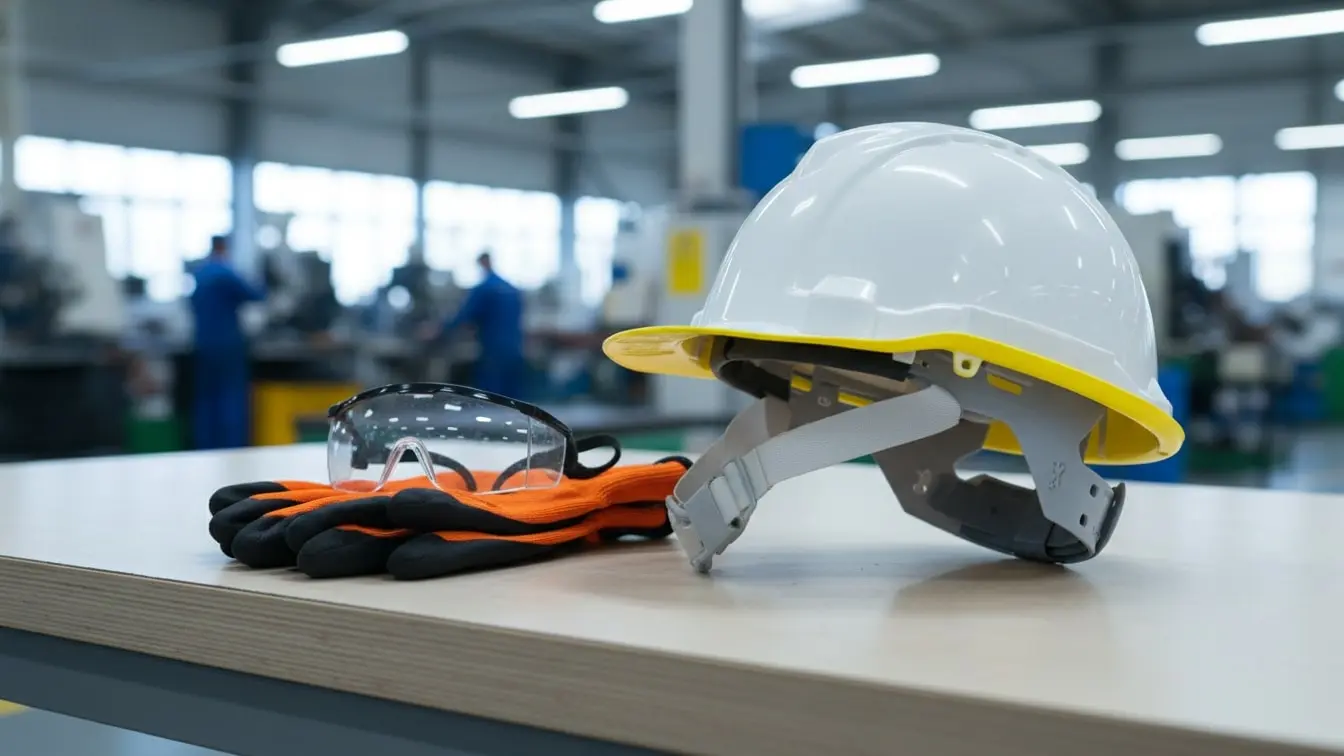
OSHA PPE Self-Inspection Checklist: A Complete Guide to Workplace Personal Protective Equipment Safety
Personal Protective Equipment (PPE) serves as one of the most important defenses against workplace hazards. While engineering controls and safe work procedures reduce risks, PPE provides an additional layer of protection when hazards cannot be completely eliminated. Therefore, employees should regularly inspect their PPE to ensure it remains safe, functional, and suitable for the task at hand. An OSHA PPE Self-Inspection Checklist helps workers identify damaged equipment, verify proper fit, and confirm that protective gear meets workplace safety requirements. As a result, organizations can reduce injuries, strengthen compliance efforts, and promote a proactive safety culture.
Whether you work in construction, manufacturing, warehousing, healthcare, mining, utilities, logistics, or facility management, a PPE self-inspection checklist supports safer daily operations.
What Is an OSHA PPE Self-Inspection Checklist?
An OSHA PPE Self-Inspection Checklist is a structured tool that employees use to evaluate the condition, functionality, and suitability of their personal protective equipment before beginning work.
The checklist typically covers:
- Hard hats
- Safety glasses
- Face shields
- Gloves
- Hearing protection
- Respiratory protection
- High-visibility clothing
- Safety footwear
Consequently, employees can identify defects and address issues before exposure to workplace hazards.
Why Is a PPE Self-Inspection Checklist Important?
Even high-quality PPE can become damaged through daily use. Therefore, routine inspections help ensure that protective equipment continues to perform as intended.
An OSHA PPE Self-Inspection Checklist helps organizations:
- Reduce workplace injuries
- Improve hazard protection
- Strengthen safety awareness
- Support regulatory compliance
- Improve employee accountability
- Extend equipment lifespan
- Reduce equipment failures
- Support workplace safety programs
Furthermore, regular inspections encourage employees to take an active role in their own safety.
Who Uses an OSHA PPE Self-Inspection Checklist?
PPE inspections apply across many industries and job roles.
Common users include:
- Construction workers
- Manufacturing employees
- Warehouse personnel
- Maintenance technicians
- Healthcare workers
- Utility crews
- Transportation employees
- Contractors
As a result, organizations can maintain consistent safety standards throughout the workforce.
Key Components of an OSHA PPE Self-Inspection Checklist
Employee and Inspection Information
Every inspection should begin with basic details.
Record:
- Employee name
- Department
- Inspection date
- Work area
- Supervisor name
- Job task
Accurate records support compliance and accountability.
Head Protection Inspection
Hard hats protect workers from falling objects and impact hazards.
Inspect for:
- Cracks
- Dents
- UV damage
- Suspension wear
- Missing components
- Improper fit
Therefore, employees can confirm that head protection remains effective.
Eye and Face Protection Inspection
Eye injuries can occur quickly in hazardous environments.
Review:
- Lens condition
- Scratches
- Cracks
- Strap condition
- Visibility
- Proper fit
Consequently, workers maintain clear vision and effective protection.
Hand Protection Inspection
Gloves protect employees from cuts, chemicals, heat, and other hazards.
Check:
- Tears
- Holes
- Wear patterns
- Contamination
- Proper sizing
As a result, hand protection remains reliable during work activities.
Hearing Protection Inspection
Noise exposure can lead to long-term hearing damage.
Inspect:
- Earplugs
- Earmuffs
- Cushion condition
- Cleanliness
- Proper fit
Therefore, hearing protection continues to perform effectively.
Respiratory Protection Inspection
Respirators require regular inspection before use.
Review:
- Face seals
- Filters
- Straps
- Valves
- Cleanliness
- Damage
Consequently, employees can verify respiratory protection before entering hazardous environments.
High-Visibility Clothing Inspection
Visibility plays a critical role in many workplaces.
Inspect:
- Reflective strips
- Fabric condition
- Tears
- Fading
- Cleanliness
This helps maintain worker visibility in high-risk areas.
Foot Protection Inspection
Safety footwear protects employees from impact, puncture, and slip hazards.
Review:
- Sole condition
- Tread wear
- Toe protection
- Damage
- Fit
As a result, workers reduce the risk of foot-related injuries.
OSHA PPE Self-Inspection Checklist Example
Employee Information
- Employee name recorded
- Date completed
- Work area identified
PPE Condition Review
- Hard hat inspected
- Safety glasses inspected
- Gloves inspected
- Hearing protection inspected
Additional Equipment Review
- Respirator checked
- High-visibility clothing inspected
- Safety boots inspected
Corrective Actions
- Defects identified
- Replacement required
- Supervisor notified
Inspection Approval
- Checklist completed
- Findings documented
- Equipment approved for use
Common Issues Found During PPE Inspections
Routine PPE inspections often reveal safety concerns.
Common findings include:
- Cracked hard hats
- Scratched safety glasses
- Damaged gloves
- Worn safety boot soles
- Faded high-visibility clothing
- Expired respirator filters
- Broken straps
- Missing PPE components
- Improper fit
- Poor equipment maintenance
Because employees identify these issues early, organizations can replace equipment before failures occur.
Benefits of Using an OSHA PPE Self-Inspection Checklist
Organizations that implement PPE self-inspections often achieve:
- Improved worker protection
- Better safety compliance
- Increased employee awareness
- Reduced injury rates
- Improved PPE maintenance
- Greater accountability
- Enhanced hazard control
- Stronger safety culture
Moreover, documented inspections support workplace audits and compliance reviews.
How eAuditor Audits & Inspections Handles PPE Self-Inspections
Paper-based PPE inspections often create documentation challenges and limited visibility into equipment conditions. However, eAuditor Audits & Inspections provides a digital solution that simplifies PPE management and safety monitoring.
Digital PPE Inspection Templates
eAuditor enables organizations to create customized PPE self-inspection forms tailored to specific workplace requirements.
Benefits include:
- Standardized inspections
- Consistent evaluations
- Improved accuracy
- Faster documentation
As a result, organizations maintain more reliable inspection programs.
Mobile Inspection Capabilities
Employees can complete inspections using smartphones or tablets.
This allows teams to:
- Perform inspections anywhere
- Record findings instantly
- Submit reports immediately
- Continue inspections offline
Consequently, PPE inspections become easier and more efficient.
Photo and Evidence Collection
eAuditor supports detailed documentation.
Users can attach:
- Equipment photos
- Damage records
- Replacement requests
- Corrective action evidence
Therefore, managers gain better visibility into equipment conditions.
Automated Corrective Actions
When PPE defects are identified, eAuditor supports immediate action management.
Organizations can:
- Assign replacement tasks
- Set deadlines
- Track progress
- Verify completion
This helps ensure that damaged equipment receives prompt attention.
Real-Time Reporting and Dashboards
eAuditor provides immediate access to inspection data.
Managers can:
- Monitor PPE compliance
- Review recurring issues
- Track replacement trends
- Analyze inspection performance
As a result, leaders can make informed safety decisions.
Centralized PPE Records
All PPE inspection records remain securely stored within one platform.
Organizations can manage:
- Inspection reports
- Replacement records
- Corrective actions
- Compliance documentation
- Historical assessments
Because information remains centralized, audits and reviews become more efficient.
Analytics for Continuous Improvement
eAuditor transforms inspection findings into actionable insights.
Organizations can:
- Improve PPE programs
- Reduce recurring defects
- Strengthen safety awareness
- Improve equipment management
- Support proactive risk reduction
Therefore, businesses can continuously improve workplace safety performance.
OSHA PPE Self-Inspection Checklist Resources
The following verified eAuditor resources provide valuable guidance for workplace inspections, PPE management, and safety compliance.
eAuditor Template Library
https://library.eauditor.app/
eAuditor Blog
https://eauditor.app/blog
Safety Management Resources
https://eauditor.app/blog/category/safety-management/
Workplace Inspection Guidance
https://eauditor.app/blog/workplace-inspection/
Best Practices for PPE Self-Inspections
Inspect PPE Before Every Use
Daily inspections help identify defects before work begins.
Replace Damaged Equipment Immediately
Defective PPE should never remain in service.
Train Employees Regularly
Training improves inspection quality and PPE awareness.
Document Inspection Results
Accurate records support compliance and accountability.
Use Digital Inspection Tools
Digital platforms improve efficiency, visibility, reporting accuracy, and record management.
Conclusion
An OSHA PPE Self-Inspection Checklist helps organizations protect employees, improve compliance, and strengthen workplace safety programs. Moreover, regular inspections ensure that personal protective equipment remains reliable and effective when workers need it most.
When organizations use eAuditor Audits & Inspections, they digitize PPE inspections, centralize records, automate corrective actions, and gain real-time visibility into equipment conditions. As a result, teams can manage PPE more effectively while reducing risks and supporting a safer workplace.
Frequently Asked Questions
1. What is an OSHA PPE Self-Inspection Checklist?
An OSHA PPE Self-Inspection Checklist is a structured tool employees use to evaluate the condition and functionality of personal protective equipment before work begins.
2. Why are PPE inspections important?
PPE inspections help identify damage, ensure proper functionality, and reduce the risk of workplace injuries.
3. How often should PPE be inspected?
Employees should inspect PPE before each use and according to company policies.
4. What equipment should be included in a PPE inspection?
Common items include hard hats, safety glasses, gloves, respirators, hearing protection, high-visibility clothing, and safety footwear.
5. Who is responsible for PPE inspections?
Employees, supervisors, safety officers, and managers all play important roles in PPE inspection programs.
6. What are common PPE inspection findings?
Common findings include cracks, tears, worn components, damaged straps, improper fit, and expired equipment.
7. How does eAuditor support PPE inspections?
eAuditor provides digital checklists, mobile inspections, photo documentation, corrective action tracking, analytics, centralized records, and reporting dashboards.
8. What should employees do if PPE is damaged?
Employees should report the issue immediately and replace the damaged equipment before continuing work.
9. What benefits do digital PPE inspection tools provide?
Digital tools improve efficiency, accountability, reporting accuracy, visibility, and compliance management.
10. How can organizations improve PPE compliance?
Organizations can improve compliance through regular inspections, employee training, equipment maintenance, corrective action management, and digital safety solutions. https://eauditor.app/2026/07/19/osha-ppe-self-inspection-checklist/


Comments
Post a Comment