Standard Operating Procedure Template (Food Manufacturing): A Complete Guide to Consistent Food Safety and Quality
Food manufacturing requires precision, consistency, and strict control at every stage. From receiving raw materials to packaging finished products, every process affects food safety, quality, and customer trust. Therefore, food manufacturers need clear procedures that employees can follow every day. A Standard Operating Procedure Template Standard Operating Procedure (Food Manufacturing) helps organizations document processes, maintain quality standards, improve employee training, and support regulatory compliance. As a result, businesses can reduce errors, improve efficiency, and create safer food production environments.
Whether you operate a small food processing facility, large manufacturing plant, beverage production site, bakery, dairy operation, or packaged food facility, a structured SOP template helps teams maintain consistent operations.
What Is a Standard Operating Procedure Template for Food Manufacturing?
A Standard Operating Procedure Template (Food Manufacturing) is a documented framework that explains how employees should complete specific tasks safely, efficiently, and consistently within a food production environment.
The template typically includes:
- Process instructions
- Safety requirements
- Quality checks
- Equipment procedures
- Cleaning steps
- Employee responsibilities
- Documentation requirements
- Corrective actions
Consequently, employees understand expectations and follow approved methods during daily operations.
Why Is a Food Manufacturing SOP Template Important?
Food manufacturers manage complex processes where small mistakes can create major consequences. Therefore, organizations must establish clear procedures to control risks and maintain product quality.
A Standard Operating Procedure Template for Food Manufacturing helps businesses:
- Improve food safety
- Maintain consistent production
- Reduce operational errors
- Support employee training
- Improve regulatory compliance
- Strengthen quality control
- Reduce contamination risks
- Improve productivity
Furthermore, documented procedures help employees perform tasks correctly, even when teams change or production demands increase.
Who Uses Food Manufacturing SOP Templates?
SOP templates support multiple roles throughout food production operations.
Common users include:
- Food production managers
- Quality assurance teams
- Food safety officers
- Maintenance teams
- Warehouse employees
- Packaging operators
- Production supervisors
- Compliance managers
As a result, every department can follow consistent procedures and maintain quality standards.
Key Components of a Standard Operating Procedure Template (Food Manufacturing)
SOP Identification and Document Control
Every SOP should begin with clear document information.
Include:
- SOP title
- Document number
- Version date
- Department
- Approval details
- Review schedule
Therefore, teams can easily manage updates and maintain accurate documentation.
Purpose and Scope Definition
A clear purpose explains why the SOP exists.
Document:
- Process objectives
- Applicable departments
- Production areas covered
- Expected outcomes
Consequently, employees understand when and how to apply the procedure.
Roles and Responsibilities
Every employee involved in the process should understand their duties.
Define:
- Operator responsibilities
- Supervisor responsibilities
- Quality team responsibilities
- Approval requirements
As a result, organizations improve accountability and reduce confusion.
Raw Material Handling Procedures
Food safety begins with proper ingredient management.
Review:
- Receiving procedures
- Supplier verification
- Storage requirements
- Inspection criteria
- Handling practices
Therefore, manufacturers reduce the risk of unsafe materials entering production.
Production Process Instructions
Clear production instructions help employees maintain consistency.
Include:
- Equipment setup
- Process steps
- Operating conditions
- Quality checkpoints
- Safety precautions
Consequently, production teams can deliver consistent products.
Equipment Operation and Maintenance
Equipment performance directly affects food quality.
Document:
- Operating procedures
- Cleaning requirements
- Maintenance schedules
- Safety checks
- Troubleshooting steps
As a result, organizations improve reliability and reduce production interruptions.
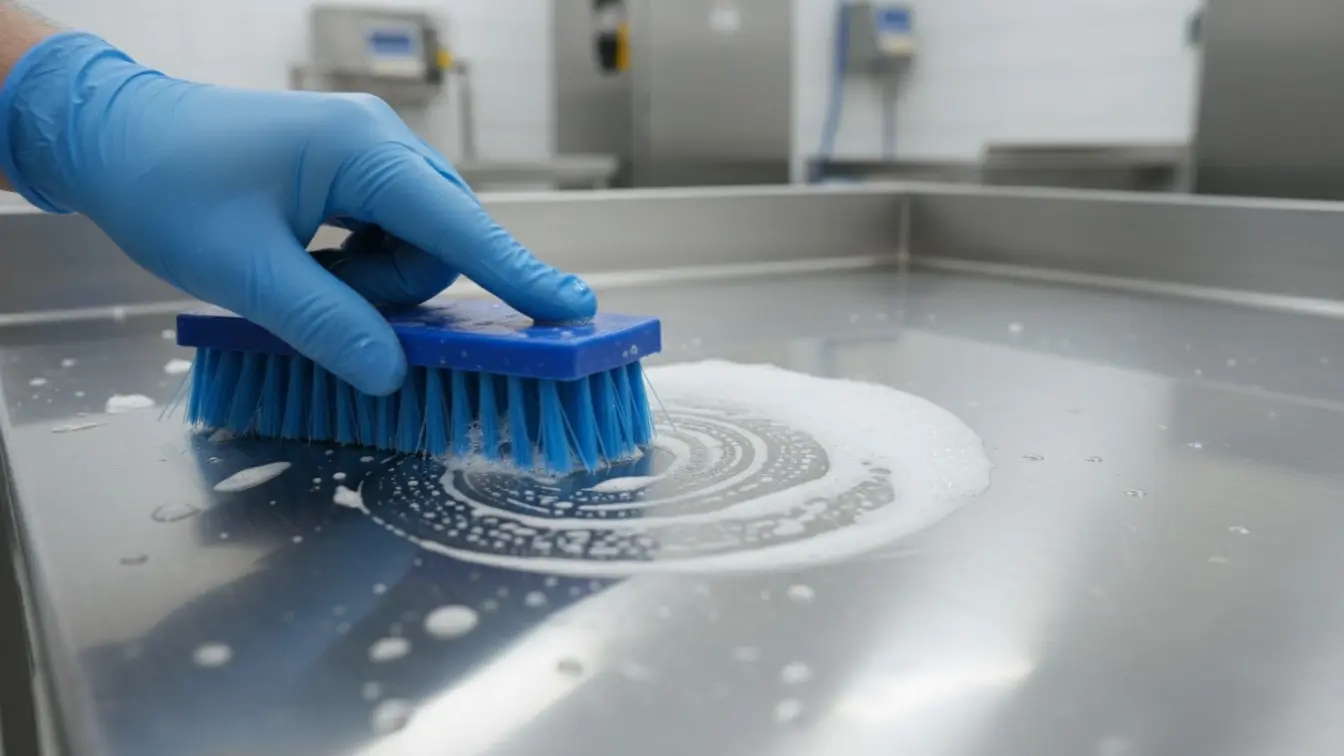
Cleaning and Sanitation Procedures
Sanitation plays a critical role in food manufacturing.
Evaluate:
- Cleaning methods
- Chemical usage
- Sanitization frequency
- Inspection requirements
- Verification processes
Therefore, facilities can maintain hygienic production environments.
Quality Control Checks
Quality checks ensure products meet established standards.
Review:
- Product specifications
- Sampling procedures
- Inspection points
- Testing requirements
- Acceptance criteria
Consequently, manufacturers maintain product consistency and customer confidence.
Documentation and Record Keeping
Accurate records support traceability and compliance.
Maintain:
- Production logs
- Cleaning records
- Inspection reports
- Training records
- Corrective action reports
Therefore, organizations can demonstrate effective process control.
Standard Operating Procedure Template Example for Food Manufacturing
Document Information
- SOP title recorded
- Version controlled
- Approval completed
Process Requirements
- Steps clearly defined
- Safety instructions included
- Quality checks identified
Employee Responsibilities
- Roles assigned
- Training completed
- Procedures understood
Verification Activities
- Inspections completed
- Records maintained
- Issues documented
Continuous Improvement
- Feedback collected
- Procedures reviewed
- Updates implemented
Common Issues Without Proper Food Manufacturing SOPs
Organizations without effective SOPs often experience operational challenges.
Common issues include:
- Inconsistent production methods
- Employee confusion
- Poor documentation
- Increased contamination risks
- Training difficulties
- Quality variations
- Compliance challenges
- Equipment misuse
- Inefficient workflows
- Delayed corrective actions
Because SOPs create structure, organizations can reduce these risks and improve operational control.
Benefits of Using a Standard Operating Procedure Template (Food Manufacturing)
Food manufacturers that implement effective SOPs often achieve:
- Improved food safety
- Better quality control
- Consistent production
- Faster employee training
- Stronger compliance
- Reduced operational errors
- Improved traceability
- Better audit readiness
Moreover, standardized procedures create a foundation for continuous improvement.
How eAuditor Audits & Inspections Handles Food Manufacturing SOP Management
Traditional SOP management often relies on paper documents, spreadsheets, and manual reviews. As a result, organizations may struggle with outdated procedures, limited visibility, and inconsistent execution. However, eAuditor Audits & Inspections provides a digital solution that helps food manufacturers manage procedures, inspections, and compliance activities more effectively.
Digital SOP and Inspection Templates
eAuditor enables organizations to create customized food manufacturing templates based on operational requirements.
Benefits include:
- Standardized procedures
- Easy access to instructions
- Improved documentation
- Faster process reviews
As a result, employees can follow approved procedures more consistently.
Mobile Access for Production Teams
Employees can access checklists and procedures using smartphones or tablets.
This allows teams to:
- Complete inspections on the production floor
- Record process observations
- Capture issues immediately
- Access updated procedures
Consequently, teams improve compliance during daily operations.
Quality and Safety Evidence Collection
eAuditor supports detailed documentation.
Users can capture:
- Production photos
- Quality inspection results
- Sanitation records
- Equipment observations
- Corrective action evidence
Therefore, organizations maintain stronger traceability.
Automated Corrective Actions
When SOP deviations occur, eAuditor helps teams manage improvements.
Organizations can:
- Assign corrective actions
- Set deadlines
- Track completion
- Verify effectiveness
This ensures process issues receive timely attention.
Real-Time Reporting and Dashboards
eAuditor provides visibility into operational performance.
Managers can:
- Monitor SOP compliance
- Review inspection results
- Identify recurring issues
- Track improvement activities
As a result, food manufacturers can make better operational decisions.
Centralized Food Safety Records
eAuditor stores important records in one secure platform.
Organizations can manage:
- SOP inspections
- Quality checks
- Food safety audits
- Corrective actions
- Training documentation
Because records remain centralized, audits and compliance reviews become easier.
Analytics for Continuous Improvement
eAuditor transforms operational data into actionable insights.
Organizations can:
- Improve production processes
- Identify recurring problems
- Strengthen food safety programs
- Improve employee performance
- Support compliance goals
Therefore, manufacturers can continuously improve their operations.
Standard Operating Procedure Template (Food Manufacturing) Resources
The following verified eAuditor resources provide valuable information related to food safety, inspections, audits, and operational improvement.
eAuditor Template Library
https://library.eauditor.app/
Food Safety and Quality Templates
https://library.eauditor.app/en
eAuditor Blog
https://eauditor.app/blog
Food Safety Resources
https://eauditor.app/blog/category/safety-management/
Audit and Inspection Resources
https://eauditor.app/blog/workplace-inspection/
Best Practices for Food Manufacturing SOP Management
Review SOPs Regularly
Regular reviews ensure procedures remain accurate and effective.
Train Employees Consistently
Training helps employees understand and follow approved processes.
Maintain Version Control
Updated documents prevent employees from using outdated instructions.
Monitor Compliance
Regular inspections verify that teams follow established procedures.
Use Digital SOP Management Tools
Digital platforms improve accessibility, accountability, reporting, and document control.
Conclusion
A Standard Operating Procedure Template (Food Manufacturing) helps organizations maintain safe, consistent, and efficient production processes. Moreover, clear procedures improve employee performance, strengthen food safety programs, and support regulatory compliance.
When food manufacturers use eAuditor Audits & Inspections, they digitize SOP management, improve inspection processes, centralize records, automate corrective actions, and gain real-time visibility into operational performance. As a result, teams can maintain higher quality standards while building safer and more efficient food production environments.
Frequently Asked Questions
1. What is a Standard Operating Procedure Template for Food Manufacturing?
It is a structured document that defines how employees should complete food manufacturing processes safely and consistently.
2. Why are SOPs important in food manufacturing?
SOPs help maintain food safety, improve consistency, support training, and strengthen compliance.
3. Who should use food manufacturing SOP templates?
Production teams, quality managers, food safety professionals, supervisors, and compliance teams commonly use SOP templates.
4. What should a food manufacturing SOP include?
A food manufacturing SOP should include process steps, safety requirements, responsibilities, quality checks, and documentation requirements.
5. How often should SOPs be reviewed?
Organizations should review SOPs regularly and whenever processes, equipment, or regulations change.
6. What problems can occur without proper SOPs?
Without SOPs, organizations may experience inconsistent processes, quality issues, compliance risks, and increased safety concerns.
7. How does eAuditor support food manufacturing SOP management?
eAuditor provides digital templates, mobile inspections, evidence collection, corrective action tracking, analytics, and centralized records.
8. Why is SOP documentation important for food safety audits?
SOP documentation provides evidence that organizations follow controlled processes and maintain safety standards.
9. What benefits do digital SOP tools provide?
Digital tools improve accessibility, efficiency, accuracy, accountability, and compliance management.
10. How can food manufacturers improve SOP effectiveness?
Manufacturers can improve SOP effectiveness through regular reviews, employee training, digital management tools, inspections, and continuous improvement programs. https://eauditor.app/2026/07/19/standard-operating-procedure-template/


Comments
Post a Comment