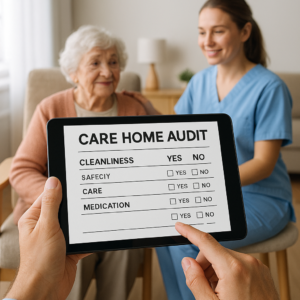
Care Home Audit Checklist
A care home audit checklist helps teams review safety, care, records, facilities, and daily routines so staff can spot gaps early and act with confidence.
Running a care home involves many daily checks. Staff must keep residents safe, maintain clean spaces, check equipment, manage records, and follow set procedures. A clear care home audit checklist brings these tasks into one simple review.
With eAuditor Audits & Inspections, care teams can use digital inspection templates to record findings and keep audit work more consistent. eAuditor also supports inspections through its web and mobile apps, making it easier to complete checks during routine work.
A good care home audit does more than find problems. It helps staff see what works, what needs attention, and what action should happen next. Regular checks can also make follow-up easier because teams have a clear record of findings.
What Is a Care Home Audit Checklist?
A care home audit checklist is a structured set of questions or checks used to review important areas of a care home. It can cover building safety, fire systems, electrical checks, equipment, water safety, records, housekeeping, and other daily operations.
The checklist gives staff a common way to review the same areas. As a result, different team members can follow the same basic process and record findings in a clear format.
A useful checklist should also leave room for notes, dates, evidence, and corrective actions. That helps managers move from simply finding an issue to tracking its resolution.
Why Use a Care Home Audit Checklist?
Care homes manage many tasks at once. Without a clear process, small checks can become easy to miss.
A care home audit checklist helps teams:
- Review key safety controls.
- Track required checks and service dates.
- Record findings in a consistent format.
- Spot overdue inspections.
- Check housekeeping standards.
- Review resident and staff safety controls.
- Identify gaps that need corrective action.
- Support regular internal reviews.
- Keep audit information easier to access.
- Follow up on issues after an inspection.
The checklist should support the care team's work rather than create extra paperwork. Simple questions and clear response options can make audits easier to complete.
Key Areas to Include in a Care Home Audit
A strong care home audit checklist should reflect the main risks and routines within the facility. The exact content can vary by location, service type, resident needs, and internal procedures.
Building and Equipment Checks
Start with the physical environment. Review important certificates, service records, and scheduled checks.
The eAuditor Care Home Audit Checklist includes checks for:
- Yearly gas safety certificates.
- Electrical installation reports.
- Hoist servicing.
- Lift and stair-lift servicing.
- Fire risk assessments.
- Fire alarm servicing.
- Emergency lighting.
- Fire extinguisher servicing.
- Nurse call systems.
- Legionella risk assessments.
- Legionella water sampling.
- Building risk assessments.
- PAT testing.
The template also records when each check was completed and when the next check is due. This makes it useful for tracking recurring compliance tasks. (E Auditor Library)
Fire and Emergency Safety
Fire safety deserves regular attention in every care setting. Staff should know whether emergency systems have been checked and whether important routes remain accessible.
An audit can review fire risk assessments, alarms, emergency lighting, extinguishers, evacuation arrangements, and staff awareness.
The eAuditor Care Home Health Safety Audit also includes checks for marked and unobstructed fire exits, emergency drills, evacuation plans, emergency contacts, and emergency response training. (E Auditor Library)
Resident Health and Safety
Resident safety should remain central to the audit process. Review whether staff follow the care home's procedures for health needs, medication, falls, complaints, nutrition, and changes in health status.
The eAuditor Care Home Health Safety Audit includes checks covering resident records, health needs, medication procedures, changes in health status, complaints, abuse awareness, falls, activities, nutrition, and health screenings. (E Auditor Library)
These checks can help managers see whether important resident-focused processes are being followed.
Risk Assessments
Risk assessments should cover both residents and staff. They also need review when circumstances change or an incident occurs.
The eAuditor Care Home Safety Checklist covers risk assessments for staff, service users, different areas of the care home, violence and aggression, lone working, manual handling, workplace stress, display screen equipment, and medication management. It also checks whether assessments are reviewed after accidents, incidents, or near misses. (E Auditor Library)
This makes risk assessment a useful section in a wider care home audit checklist.
Housekeeping and Cleanliness
Clean and well-maintained spaces support a safe and comfortable care environment. Audits can review bedrooms, bathrooms, common areas, waste handling, cleaning schedules, supplies, and high-touch surfaces.
The eAuditor Care Home Audit Template includes bedroom and ensuite bathroom checks such as cleanliness, bins, carpets, surfaces, furniture, windows, and areas that need repair. (E Auditor Library)
The Care Home Housekeeping Audit adds checks for cleaning schedules, safe storage of cleaning supplies, reporting cleaning issues, staff training, PPE, high-touch surfaces, pest control, waste disposal, product labels, deep cleaning, supervision, and daily cleaning tasks. (E Auditor Library)
PPE and Infection Prevention
PPE checks can form another useful part of a care home audit. Teams can check whether the right supplies are available, stored correctly, and used when required.
The eAuditor PPE in Care Homes Checklist covers items such as disposable aprons, gloves, eye protection, fluid-resistant masks, safe PPE storage, correct PPE use, removal after tasks, and changing single-use items between different episodes of care. (E Auditor Library)
A digital checklist can make these checks easier to repeat and document.
Nursing Documentation
Good documentation helps care teams keep an accurate record of assessments and care. An audit should therefore look at whether records are complete, dated, timed, signed or attributed correctly, and updated when required.
The eAuditor Nursing Documentation Monthly Audit Checklist checks documentation standards, accurate dates and times, staff identification, correction methods, approved abbreviations, timely entries, initial assessments, ongoing assessments, and pain assessments. (E Auditor Library)
This type of review can help teams identify documentation gaps before they become larger issues.
Health and Safety Compliance
A wider health and safety audit can bring several operational areas together. The eAuditor Care Home Health and Safety Compliance Audit checks written policies, staff training, health and safety responsibility, regular risk assessments, incident reporting, cleaning and maintenance, hazardous materials, and waste management. (E Auditor Library)
Managers can use these areas to build a broader internal audit plan around their own procedures.
How to Conduct a Care Home Audit
A simple audit process can make regular checks easier for staff.
1. Define the audit scope
Decide what you want to review. A monthly audit may focus on documentation or housekeeping, while a broader review may cover safety, equipment, facilities, and resident-related processes.
2. Use a clear checklist
Select questions that match the care home's actual needs. Avoid adding checks that staff cannot reasonably verify.
3. Complete the inspection
Walk through the relevant areas and answer each question based on what you observe or verify from records.
4. Record evidence
Add notes where a response needs context. Photos, dates, service records, and other evidence can help explain findings.
5. Identify corrective actions
When an issue appears, record what needs to happen. Assign responsibility and set a suitable target date.
6. Review outstanding issues
A completed audit should not become a forgotten document. Managers should check whether corrective actions have been completed.
7. Look for repeated problems
If the same issue appears across several audits, the team may need to review the process behind it rather than fixing the same problem again and again.
Digital Care Home Audits With eAuditor
Paper checklists can work, but digital inspections can make repeated audits easier to manage. eAuditor supports inspections through web and mobile applications, while its templates provide structured inspection forms. (eAuditor)
Teams can start from an existing template and complete inspections as part of their regular workflow. The platform also supports real-time reporting and customizable checklists. (eAuditor)
For a care home, this approach can bring routine checks into one digital process. Staff can focus on the inspection instead of managing multiple paper forms.
Related eAuditor Care Home Checklists
The eAuditor library includes several templates that can support different parts of a care home audit program:
- Care Home Audit Checklist — tracks recurring safety, equipment, fire, water, building, and testing checks. (E Auditor Library)
- Care Home Safety Checklist — covers staff, resident, workplace, medication, manual handling, and other risk assessments. (E Auditor Library)
- Care Home Audit Template — checks bedrooms, bathrooms, cleanliness, furnishings, and repair needs. (E Auditor Library)
- Care Home Housekeeping Audit — focuses on cleaning schedules, supplies, PPE, waste, pest control, and deep cleaning. (E Auditor Library)
- PPE in Care Homes Checklist — reviews PPE availability, storage, use, and replacement. (E Auditor Library)
- Nursing Documentation Monthly Audit Checklist — reviews documentation quality and care records. (E Auditor Library)
- Care Home Health and Safety Compliance Audit — reviews wider health and safety controls. (E Auditor Library)
- Care Home Health Safety Audit — covers general safety, resident safety, and emergency preparedness. (E Auditor Library)
Tips for Better Care Home Audits
Keep each question simple. Staff should understand what they need to check without lengthy explanations.
Use Yes, No, and N/A where they fit the inspection. This gives auditors a quick way to record results and avoid forcing an answer when a question does not apply.
Add notes for exceptions. A short note can explain why an item failed or why further action is needed.
Review the checklist from time to time. Care practices, equipment, procedures, and internal requirements can change.
Keep corrective actions visible. An audit becomes much more useful when managers can see which issues remain open and who needs to address them.
Use the same core checks where possible. Consistent questions make it easier to compare findings across different dates or areas.
What Makes a Good Care Home Audit Checklist?
A good care home audit checklist should be clear, practical, and relevant to the work being reviewed.
It should:
- Cover the main risks and routine controls.
- Use simple questions.
- Avoid unnecessary duplication.
- Allow notes and supporting evidence.
- Include dates and responsible people where useful.
- Support corrective actions.
- Make recurring checks easy to track.
- Work well for both planned and routine inspections.
The best checklist is not necessarily the longest one. A focused checklist that staff can complete correctly often provides more useful information than a very long form.
Build a Consistent Audit Routine
Care home audits work best when they become part of normal operations. Managers can set different frequencies for different checks based on their procedures and risk levels.
Daily reviews may cover housekeeping and immediate safety concerns. Monthly reviews can examine documentation and wider operational controls. Longer-term schedules can track servicing, certificates, assessments, and testing.
With a consistent care home audit checklist, staff know what to check and managers have a clearer view of open issues.
Frequently Asked Questions
What is a care home audit checklist?
A care home audit checklist is a structured set of questions used to review safety, facilities, records, housekeeping, equipment, and other care-home processes.
What should a care home audit checklist include?
It can include fire safety, equipment servicing, risk assessments, housekeeping, PPE, resident safety, documentation, emergency planning, maintenance, and other checks relevant to the facility.
How often should a care home audit be completed?
There is no single frequency for every type of audit. Different checks may have different schedules. A care home should set frequencies based on its procedures, risks, equipment, and applicable requirements.
Can a care home audit checklist cover housekeeping?
Yes. Housekeeping audits can review cleaning schedules, supplies, high-touch surfaces, waste disposal, deep cleaning, pest control, and staff practices. The eAuditor library includes a dedicated Care Home Housekeeping Audit template. (E Auditor Library)
Can a care home audit include resident safety?
Yes. Resident safety checks can cover health needs, medication procedures, falls, complaints, nutrition, activities, records, and emergency arrangements. The eAuditor Care Home Health Safety Audit includes several of these areas. (E Auditor Library)
Is there an eAuditor Care Home Audit Checklist?
Yes. The eAuditor library has a dedicated Care Home Audit Checklist covering recurring checks such as gas safety, electrical reports, hoists, lifts, fire systems, emergency lighting, nurse call systems, Legionella assessments, building risk assessments, and PAT testing. (E Auditor Library)
Can care home audits be completed digitally?
Yes. eAuditor supports inspections through web and mobile apps and provides customizable inspection templates. (eAuditor)
Where can I find care home audit templates?
The eAuditor library provides care-home templates for audits, safety, housekeeping, PPE, nursing documentation, and health and safety compliance. These templates can help teams create a more consistent inspection process. (E Auditor Library)
Conclusion
A care home audit checklist gives staff a clear way to review important areas of daily operations. It can bring safety checks, equipment records, housekeeping, resident safety, documentation, and corrective actions into a more consistent process.
The eAuditor library provides several ready-to-use templates for care homes, so teams can select relevant checklists instead of starting every audit from scratch. (E Auditor Library)
Regular audits do not need to feel complicated. With clear questions, good records, and timely follow-up, a care home can make inspections a practical part of everyday quality and safety work.
Verified eAuditor links
These are the URLs I verified during the research:
- Care Home Audit Checklist
- Care Home Safety Checklist
- Care Home Audit Template
- Care Home Housekeeping Audit
- PPE in Care Homes Checklist
- Nursing Documentation Monthly Audit Checklist
- Care Home Health and Safety Compliance Audit
- Care Home Health Safety Audit
- eAuditor Audits & Inspections
The main eAuditor site also confirms its inspection platform supports customizable checklists, real-time reporting, and web/mobile inspections. https://eauditor.app/2026/09/30/care-home-audit-checklist-3/


Comments
Post a Comment