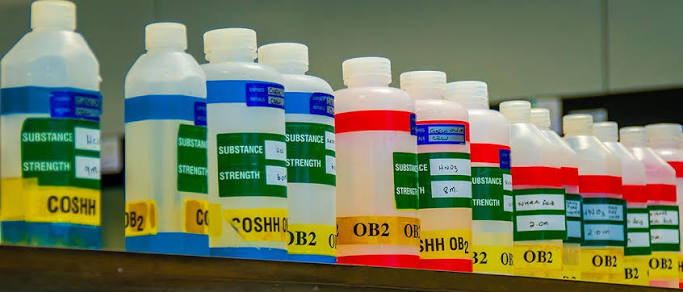
Chemical Risk Assessment Form
Chemicals can support many workplace tasks. However, they can also create serious risks when teams store, handle, mix, transport, or dispose of them without suitable controls. A Chemical Risk Assessment Form helps teams identify these risks before they cause harm. It gives workers and safety teams a clear way to record the chemicals involved, identify hazards, assess exposure, review controls, and plan corrective actions.
Moreover, a good assessment does more than list chemicals. It looks at how people use them in real work. Therefore, it can help teams spot risks that may not appear on a chemical label alone.
A digital Chemical Risk Assessment Form can make this process easier. With eAuditor Audits & Inspections, teams can build structured assessments, record findings in the field, attach evidence, score risks, assign actions, and review results over time.
What Is a Chemical Risk Assessment Form?
A Chemical Risk Assessment Form is a structured document used to identify and assess hazards linked to chemicals used or stored in a workplace.
It helps teams answer practical questions such as:
- What chemical is being used?
- Where is it stored?
- How is it used?
- What hazards does it present?
- Who may be exposed?
- How could exposure occur?
- What controls are already in place?
- Are those controls working?
- What additional action is needed?
Therefore, the form turns chemical safety into a clear and repeatable process.
The verified eAuditor Chemical Risk Assessment Template covers chemical identification, chemical properties, exposure assessment, health risks, control measures, compliance, and ongoing review.
Why Is a Chemical Risk Assessment Important?
Chemical risks can vary from one workplace to another.
For example, the same substance may create different risks depending on its concentration, quantity, storage method, ventilation, task, and frequency of use.
Therefore, teams should assess the actual work process rather than rely only on general chemical information.
A Chemical Risk Assessment can help teams:
- Identify hazardous substances
- Understand chemical hazards
- Assess possible exposure
- Review existing controls
- Identify gaps
- Improve storage practices
- Check PPE requirements
- Improve emergency planning
- Assign corrective actions
- Monitor changes over time
Furthermore, regular reviews help keep the assessment useful when chemicals, processes, equipment, or working conditions change.
When Should You Complete a Chemical Risk Assessment?
A chemical risk assessment should take place before workers start a new chemical-related task.
However, the assessment should also be reviewed when conditions change.
Review the assessment when:
- A new chemical is introduced
- A chemical changes
- A process changes
- A new work area opens
- Storage arrangements change
- Ventilation changes
- New equipment is installed
- Exposure conditions change
- An incident occurs
- A near miss occurs
- New hazard information becomes available
- Existing controls no longer work as expected
Therefore, teams should treat the assessment as a living safety document.
The verified eAuditor DSEAR Risk Assessment Template also recommends review when new chemicals, processes, equipment, storage arrangements, ventilation, incidents, or other important conditions change.
What Should a Chemical Risk Assessment Form Include?
A useful form should cover the full chemical lifecycle. It should start with identification and continue through exposure, controls, emergency response, and follow-up.
Chemical Identification
First, record the chemical or product being assessed.
Useful information may include:
- Chemical name
- Product name
- Manufacturer
- Chemical identification number
- Concentration
- Physical state
- Quantity used
- Quantity stored
- Storage location
- Intended use
Therefore, the assessment starts with a clear understanding of the substance involved.
Chemical Properties and Hazards
Next, identify the main hazards.
These may include:
- Toxicity
- Corrosivity
- Flammability
- Reactivity
- Oxidizing properties
- Irritation
- Sensitization
- Environmental hazards
Review the available Safety Data Sheet and product information as part of the assessment.
The verified eAuditor Chemical Safety Checklist – COSHH includes chemical inventory, hazard identification, SDS review, exposure assessment, and control measures.
Exposure Assessment
A chemical may create a risk when workers come into contact with it.
Therefore, the assessment should consider how exposure could happen.
Possible routes include:
- Inhalation
- Skin contact
- Eye contact
- Ingestion
- Injection
Also consider:
- How often the task occurs
- How long workers handle the chemical
- How much chemical they use
- Whether the task creates vapors, dust, mist, or fumes
- How many people may be exposed
As a result, teams can focus controls on the actual exposure routes.
Who May Be Exposed?
The assessment should identify people who may come into contact with the chemical.
These may include:
- Operators
- Maintenance workers
- Cleaners
- Contractors
- Supervisors
- Laboratory staff
- Temporary workers
- Visitors
Furthermore, consider people who may enter the area even if they do not directly use the chemical.
Existing Control Measures
Next, review the controls already in place.
These may include:
- Chemical substitution
- Enclosed systems
- Local exhaust ventilation
- General ventilation
- Safe operating procedures
- Chemical storage controls
- Spill containment
- PPE
- Training
- Warning signs
- Emergency equipment
The aim is not simply to list controls. Instead, confirm whether they are suitable and maintained.
The verified eAuditor Chemical Risk Assessment Template includes control measures such as substitution, ventilation, PPE, and emergency measures as part of the assessment process.
Risk Rating
A Chemical Risk Assessment Form can use a risk matrix to help teams prioritize hazards.
For example, teams may assess:
- Likelihood
- Severity
- Exposure
- Existing controls
- Overall risk level
A simple system may classify findings as:
- Low
- Medium
- High
- Critical
However, organizations should use a risk-rating method that matches their own procedures and applicable requirements.
Additional Control Measures
If existing controls do not reduce the risk enough, identify additional actions.
Possible improvements may include:
- Using a safer chemical
- Reducing the quantity used
- Improving ventilation
- Changing the work method
- Improving containment
- Updating procedures
- Providing suitable PPE
- Improving chemical storage
- Providing additional training
Therefore, the assessment should lead to practical improvement.
Chemical Storage
Storage can create significant chemical risks.
The assessment should check:
- Correct labeling
- Container condition
- Compatible storage
- Secure storage
- Ventilation
- Spill containment
- Separation of incompatible substances
- Access controls
The verified eAuditor Chemical Handling Checklist includes checks for labeled containers, suitable storage locations, ventilation, incompatible substances, and accessible SDS information.
Chemical Handling Procedures
Workers should have clear instructions for using chemicals safely.
The assessment can review whether:
- Procedures are available
- Workers follow approved methods
- Containers remain closed when not in use
- Transfer methods are suitable
- Mixing procedures are controlled
- Chemical handling areas remain organized
Moreover, procedures should reflect the actual chemicals and tasks used at the site.
Personal Protective Equipment
PPE can form part of the control strategy when other controls do not fully remove exposure.
The form may check:
- Required PPE
- PPE availability
- PPE condition
- Correct use
- Training
- Replacement requirements
The verified eAuditor Chemical Handling Checklist includes PPE availability, PPE condition, and training checks.
Safety Data Sheets
Safety Data Sheets provide important information about chemical hazards and safe handling.
Therefore, the assessment should confirm that relevant SDS information is available to workers who need it.
Teams can check:
- SDS availability
- Current information
- Worker access
- Storage of chemical information
- Understanding of key precautions
The verified eAuditor Chemical Safety Checklist – COSHH includes checks for SDS availability, review, and employee understanding.
Spill and Emergency Controls
Chemical incidents can require quick action.
Therefore, the assessment should review emergency arrangements.
Checks may include:
- Spill kits
- Eyewash stations
- Emergency showers
- Fire equipment
- Emergency contacts
- Spill response procedures
- Exposure response procedures
- Emergency training
The verified eAuditor Chemical Handling Checklist includes checks for spill kits, eyewash stations, emergency procedures, and worker awareness of chemical exposure and spill response.
Chemical Waste Disposal
Chemical waste should receive appropriate attention.
The assessment can check:
- Waste containers
- Labels
- Segregation
- Temporary storage
- Disposal procedures
- Worker training
Therefore, teams can identify gaps before waste creates additional safety or environmental risks.
How to Complete a Chemical Risk Assessment Form
A clear process helps teams complete assessments consistently.
Step 1: Identify the Chemical
Record the chemical, product, quantity, concentration, and intended use.
Then, confirm the relevant hazard information.
Step 2: Review the Work Activity
Look at how people use, move, store, mix, or dispose of the chemical.
This step matters because the same chemical can create different risks in different tasks.
Step 3: Identify Exposure Routes
Determine how workers could come into contact with the substance.
Consider inhalation, skin contact, eye contact, ingestion, and other relevant routes.
Step 4: Identify People at Risk
Record everyone who may be exposed.
Include workers who perform the task and others who may enter the area.
Step 5: Review Existing Controls
Check ventilation, containment, procedures, storage, PPE, training, and emergency controls.
Then, determine whether those controls work as intended.
Step 6: Rate the Risk
Use the organization's approved risk matrix.
Record the likelihood and potential severity, then determine the overall risk level.
Step 7: Define Additional Actions
Where controls need improvement, record the action required.
Assign responsibility and set a suitable completion date.
Step 8: Review and Follow Up
Finally, review the assessment after actions are completed.
Check whether the controls now reduce the risk as intended.
How eAuditor Audits & Inspections Handles Chemical Risk Assessments
Paper forms can make chemical assessments harder to manage.
Records may become separated from supporting evidence. Corrective actions may also remain open without clear ownership.
eAuditor Audits & Inspections provides a digital workflow for creating, completing, reviewing, and following up on chemical risk assessments.
Create a Custom Chemical Risk Assessment Form
Teams can create or customize a digital form around their chemical risks.
Sections can cover:
- Chemical identification
- Hazard classification
- Exposure
- Risk scoring
- Existing controls
- PPE
- Storage
- Emergency response
- Corrective actions
- Review dates
Therefore, teams can build an assessment that matches their workplace.
The verified eAuditor Chemical Risk Assessment Template explains how teams can create or customize a checklist around chemical identification, exposure risks, hazard controls, and safety protocols.
Assess Risks in the Field
Teams can complete assessments while reviewing the work area.
They can record observations as they identify them instead of writing everything down and entering it later.
As a result, the assessment can reflect actual site conditions.
Capture Photos and Notes
Chemical risks often benefit from visual evidence.
For example, teams may document:
- Damaged containers
- Poor chemical storage
- Missing labels
- Inadequate PPE
- Spill risks
- Missing safety equipment
eAuditor supports photo and note capture as part of chemical risk assessment and inspection workflows.
Score and Prioritize Risks
A digital form can help teams apply a consistent risk-rating method.
This makes it easier to identify findings that need urgent attention.
The verified eAuditor risk management guidance describes using likelihood and severity to assign risk levels and prioritize higher-risk areas.
Assign Corrective Actions
A risk assessment should lead to action when teams identify a gap.
eAuditor can support corrective action workflows by allowing teams to assign tasks and track their status.
For example:
- Replace damaged storage
- Improve ventilation
- Update a procedure
- Provide PPE
- Repair emergency equipment
- Deliver additional training
Therefore, findings can move from identification to resolution.
Generate Reports
After completing an assessment, teams can generate structured reports.
Reports can include:
- Assessment findings
- Risk ratings
- Notes
- Photos
- Recommended actions
- Corrective action status
As a result, managers can review chemical risks without sorting through separate paper forms.
The verified eAuditor Chemical Risk Assessment Template describes reports containing findings, exposure risks, recommendations, compliance ratings, photos, and corrective actions.
Schedule Reviews and Follow-Up
Chemical risks can change.
Therefore, teams should review assessments when conditions change and at suitable planned intervals.
eAuditor can support scheduled assessments and follow-up activities so teams can continue monitoring chemical risks over time.
Example Chemical Risk Assessment Form
General Information
- Assessment date
- Assessor name
- Department
- Work area
- Chemical name
- Product name
- Task or process
- Number of people exposed
Chemical Information
- Chemical concentration
- Physical state
- Quantity used
- Quantity stored
- Storage location
- Hazard classification
- SDS available
Hazard Identification
- Is the chemical toxic?
- Is it corrosive?
- Is it flammable?
- Is it reactive?
- Is it an irritant?
- Does it create an inhalation hazard?
- Does it create an environmental hazard?
Exposure Assessment
- Can workers inhale the substance?
- Can skin contact occur?
- Can eye contact occur?
- Can accidental ingestion occur?
- How often does exposure occur?
- How long does exposure last?
Existing Controls
- Is suitable ventilation available?
- Is the chemical contained?
- Are safe procedures available?
- Is suitable PPE provided?
- Are workers trained?
- Are warning signs visible?
- Are emergency controls available?
Risk Evaluation
- Likelihood
- Severity
- Existing control effectiveness
- Risk rating
- Additional controls required
Corrective Actions
- Action required
- Responsible person
- Priority
- Due date
- Completion status
- Verification
Review
- Assessment review date
- Changes since previous assessment
- New chemicals
- Process changes
- New incidents
- Control effectiveness
- Final review comments
Common Chemical Risk Assessment Mistakes
A risk assessment can lose value when teams treat it as a form-filling exercise.
Common mistakes include:
- Failing to identify all chemicals
- Using outdated SDS information
- Ignoring exposure routes
- Listing controls without checking them
- Relying only on PPE
- Ignoring storage risks
- Missing emergency controls
- Using vague risk descriptions
- Failing to assign corrective actions
- Not reviewing the assessment after changes
Therefore, teams should focus on the quality of the assessment rather than simply completing every field.
Best Practices for Chemical Risk Assessments
Keep the Assessment Specific
Avoid generic statements.
Instead, describe the actual chemical, task, location, exposure route, and control.
Review the Work as It Happens
Do not assess the chemical only from an office.
Where appropriate, observe the task and the working environment.
This can reveal practical issues that paperwork may miss.
Use the Hierarchy of Controls
Consider ways to remove or reduce the hazard before relying heavily on PPE.
For example, teams may consider substitution, containment, or engineering controls before using PPE as the main control.
Keep Chemical Information Current
Update assessments when chemicals, quantities, equipment, or processes change.
Therefore, the assessment remains useful rather than becoming an outdated document.
Follow Up on Actions
A risk assessment has limited value if identified problems remain unresolved.
Assign responsibility, set deadlines, and verify completion.
Review Recurring Findings
If the same issue appears repeatedly, investigate why.
The repeated finding may indicate a weakness in training, equipment, storage, procedures, or supervision.
Verified eAuditor Resources
Chemical Risk Assessment Template
Chemical Risk Assessment Template — eAuditor
This verified eAuditor resource covers chemical identification, properties, exposure, health risks, controls, compliance, reporting, corrective actions, and ongoing review.
Chemical Handling Checklist
Chemical Handling Checklist — eAuditor
This verified resource covers PPE, chemical storage, SDS availability, handling procedures, spill response, waste disposal, emergency preparedness, and corrective actions.
Chemical Safety Checklist – COSHH
Chemical Safety Checklist – COSHH — eAuditor
This verified guide covers chemical inventory, hazard identification, exposure assessment, SDS, PPE, storage, handling, spill response, and emergency procedures.
DSEAR Risk Assessment Template
DSEAR Risk Assessment Template — eAuditor
This verified resource covers dangerous substances, chemical inventories, storage, process changes, ignition risks, and review requirements.
DSEAR Risk Assessment Checklist
DSEAR Risk Assessment Checklist — eAuditor
This verified eAuditor guide covers dangerous substances, hazard information, control measures, emergency procedures, risk zones, corrective actions, and reporting.
Frequently Asked Questions
1. What is a Chemical Risk Assessment Form?
A Chemical Risk Assessment Form is a structured tool used to identify chemical hazards, assess exposure, review controls, rate risks, and record required actions.
2. Why is a Chemical Risk Assessment Form important?
It helps teams understand chemical hazards and identify suitable controls before exposure causes harm.
3. What information should a Chemical Risk Assessment Form include?
It should include chemical identification, hazards, exposure routes, people at risk, existing controls, risk ratings, additional controls, emergency measures, and corrective actions.
4. Who should complete a chemical risk assessment?
A competent person with suitable knowledge of the chemical, task, workplace, and relevant risk controls should complete or lead the assessment.
5. When should a chemical risk assessment be reviewed?
Review it when a new chemical, process, equipment, storage method, incident, or other significant condition changes. https://eauditor.app/2026/09/19/chemical-risk-assessment-form/


Comments
Post a Comment