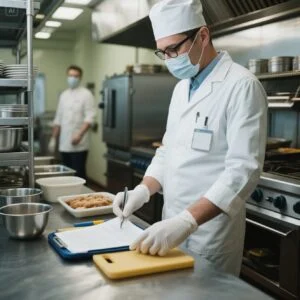
Food Safety Audit Checklist
A food safety audit checklist helps food teams check hygiene, storage, temperatures, cleaning, and controls while finding risks before they harm customers.
Food safety depends on many small actions. Staff must receive food safely, store it correctly, control temperatures, prevent cross-contamination, clean equipment, and maintain good hygiene. Therefore, a clear checklist gives teams one simple way to review these controls.
With eAuditor Audits & Inspections, food businesses can move food safety audits from paper to a digital workflow. Teams can complete inspections on phones or tablets, record findings, add evidence, assign corrective actions, and keep inspection records in one place.
A good food safety audit checklist does more than tick boxes. It helps people spot weak points, fix issues quickly, and build safer daily habits.
What Is a Food Safety Audit Checklist?
A food safety audit checklist is a structured list of questions used to review food handling, hygiene, storage, preparation, cleaning, equipment, staff practices, and other food safety controls.
Instead of relying on memory, employees follow the same checks each time. As a result, managers can compare results and identify repeated problems.
The checklist should match the food business. A restaurant may focus on kitchen hygiene and food service. Meanwhile, a food manufacturer may need deeper checks for HACCP, traceability, allergens, suppliers, and process controls.
Why Is a Food Safety Audit Checklist Important?
Food safety problems can start with simple mistakes. A poorly cleaned surface, an incorrect storage temperature, damaged packaging, or weak hand hygiene can create a serious risk.
Regular audits help teams:
- Find hazards early.
- Check food storage conditions.
- Review temperature controls.
- Reduce cross-contamination risks.
- Confirm cleaning and sanitation tasks.
- Check personal hygiene.
- Review pest control.
- Verify equipment condition.
- Check food receiving practices.
- Record non-conformities.
- Assign corrective actions.
- Track action completion.
- Keep audit evidence.
- Support internal and external audits.
More importantly, regular checks turn food safety into a routine rather than a once-a-year activity.
What Should a Food Safety Audit Checklist Cover?
A useful food safety audit checklist should cover the complete food journey. Start with receiving, then review storage, preparation, cooking, holding, service, cleaning, waste, and corrective actions.
The exact questions should depend on the risks and legal requirements that apply to your operation.
1. Food Receiving
Food safety starts before ingredients enter the kitchen or production area.
During an audit, check whether:
- Suppliers are approved where required.
- Delivered food arrives in good condition.
- Packages are intact.
- Labels and dates are correct.
- Chilled and frozen food meets required conditions.
- Food shows no obvious signs of spoilage.
- Damaged cans or packages are removed.
- Delivery checks are recorded.
- Allergens and special ingredients receive proper controls.
The Food Safety Kitchen Inspection Checklist in the eAuditor library includes checks for approved food sources, food condition, labeling, package integrity, receiving temperatures, and storage.
2. Food Storage
Good storage protects food from contamination and spoilage.
Check that:
- Raw and ready-to-eat foods stay separated.
- Food remains covered.
- Containers are clean and suitable.
- Food receives clear labels and dates.
- FIFO practices are followed where appropriate.
- Food stays off the floor.
- Refrigerators and freezers have suitable thermometers.
- Storage areas remain clean and organized.
- Chemicals stay away from food.
- Food remains within required storage conditions.
The Food Facility Self-Inspection Checklist covers approved food sources, protection from contamination, labeled containers, storage above the floor, separation of raw and cooked food, and temperature control. (eAuditor)
3. Temperature Control
Temperature control plays a key role in food safety. Therefore, audit teams should check temperatures at the right points in the process.
Review:
- Receiving temperatures.
- Refrigerator temperatures.
- Freezer temperatures.
- Cooking temperatures.
- Cooling records.
- Hot-holding temperatures.
- Cold-holding temperatures.
- Thermometer condition.
- Thermometer calibration.
- Actions taken after temperature failures.
Do not copy temperature limits from a generic checklist without checking the rules that apply to your location, food type, and process.
4. Personal Hygiene
Food handlers can directly affect food safety. For that reason, personal hygiene should remain a core part of every audit.
Check whether employees:
- Wash their hands correctly.
- Wash hands at suitable times.
- Keep nails clean.
- Wear clean protective clothing where required.
- Keep hair restrained.
- Cover cuts and wounds correctly.
- Follow illness reporting rules.
- Use gloves correctly.
- Avoid unsafe food handling practices.
- Keep personal belongings away from food areas.
The eAuditor Food Safety Kitchen Inspection Checklist includes checks for handwashing, gloves, illness, protective clothing, jewelry, hair restraints, and ready-to-eat food handling.
5. Cross-Contamination Control
Cross-contamination happens when harmful bacteria, allergens, chemicals, or other hazards move from one food, surface, person, or item to another.
A strong audit should check that:
- Raw food stays separate from ready-to-eat food.
- Separate preparation areas are used where needed.
- Cutting boards are cleaned and sanitized between uses.
- Food-contact surfaces are cleaned between tasks.
- Staff wash hands when changing tasks.
- Equipment is cleaned correctly.
- Chemicals stay away from food.
- Food remains protected during preparation.
- Allergens receive suitable controls.
The eAuditor Food Safety Self-Inspection Checklist includes checks for separate raw and ready-to-eat food storage, correct handwashing, safe thawing, and separate preparation areas.
6. Cleaning and Sanitation
Cleaning removes dirt and food residue. Sanitation then helps control microorganisms on suitable food-contact surfaces. Both steps matter.
Audit teams can review:
- Worktops.
- Cutting boards.
- Knives.
- Food preparation equipment.
- Sinks.
- Dishwashing areas.
- Storage shelves.
- Refrigerators.
- Floors.
- Drains.
- Waste areas.
- Cleaning tools.
- Wiping cloths.
- High-touch surfaces.
The eAuditor Food Safety Inspection Checklist covers dishwashing setup, water temperatures, sanitizer concentration, air drying, wiping cloths, utensils, work surfaces, thermometers, drawers, racks, and food slicers. (eAuditor)
7. Pest Control
Pests can contaminate food, packaging, equipment, and work areas. Therefore, pest control should form part of routine food safety audits.
Look for:
- Droppings.
- Insects.
- Rodents.
- Damaged packaging.
- Entry points.
- Standing water.
- Food waste.
- Poor waste storage.
- Gaps around doors and windows.
- Evidence of pest control activity.
The eAuditor Food Safety Self-Inspection Checklist includes checks for regular pest inspections and pest control systems.
8. Equipment and Facility Conditions
Safe food handling also depends on the condition of the workplace.
Inspect:
- Refrigerators.
- Freezers.
- Cooking equipment.
- Dishwashers.
- Food preparation equipment.
- Thermometers.
- Sinks.
- Handwashing stations.
- Floors and walls.
- Drains.
- Ventilation.
- Food-contact surfaces.
- Storage areas.
The eAuditor self-inspection template also checks equipment maintenance, refrigeration thermometers, storage areas, sinks, and premises conditions.
9. Staff Training
A checklist cannot replace training. Employees need to understand both what they must do and why it matters.
Review training for:
- Hand hygiene.
- Food handling.
- Temperature control.
- Cleaning and sanitation.
- Cross-contamination.
- Allergen control.
- Personal hygiene.
- Food storage.
- Illness reporting.
- Corrective actions.
Keep training records current and easy to access. If the same finding appears again and again, review whether staff need better training or clearer procedures.
10. Corrective Actions
Finding a problem is only the first step. A strong food safety audit also explains what happens next.
Record:
- What went wrong.
- Where the issue occurred.
- When it was found.
- Who reported it.
- Supporting evidence.
- Immediate correction.
- Root cause, when needed.
- Responsible person.
- Due date.
- Completion status.
- Verification of the fix.
With a digital inspection workflow, teams can connect findings to corrective actions instead of keeping separate paper notes. eAuditor supports digital inspections, evidence capture, findings, and corrective action management.
eAuditor Food Safety Audit Checklists to Explore
The eAuditor template library provides several food safety checklists. Each one suits a slightly different audit need.
Food Safety Self-Inspection Checklist: This template works well for routine self-checks. It covers premises, storage, pest control, refrigeration thermometers, sinks, equipment maintenance, HACCP controls, staff training, food temperatures, handwashing, and separation of raw and ready-to-eat food.
View the Food Safety Self-Inspection Checklist
Food Safety Inspection Checklist: This checklist focuses on cleaning, warewashing, sanitizing, water temperatures, wiping cloths, utensils, work surfaces, thermometers, and food equipment.
View the Food Safety Inspection Checklist
Food Safety Kitchen Inspection Checklist: This option is useful for kitchen audits. It checks food sources, food condition, labeling, receiving, storage, FIFO practices, handwashing, employee hygiene, and cross-contamination controls.
View the Food Safety Kitchen Inspection Checklist
HACCP Food Safety Checklist: This template supports HACCP-focused reviews. It covers areas such as food sources, sanitation, thawing, temperature control, cross-contamination, food handling, and preparation practices.
View the HACCP Food Safety Checklist
ISO 22000 Food Safety Checklist (FSMS): This checklist supports food safety management system reviews. It covers premises environment, facility location, building layout, internal structures, laboratory facilities, and storage of food, packaging, ingredients, and chemicals.
View the ISO 22000 Food Safety Checklist (FSMS)
Food Facility Self-Inspection Checklist: This template covers approved food sources, food protection, labeling, storage, raw and cooked food separation, and temperature control.
View the Food Facility Self-Inspection Checklist
Restaurant Food Safety and Compliance Audit Checklist: This broader option reviews inspection records, food safety certification, staff training, employee health, hygiene, handwashing, ingredients, equipment, and food safety controls.
View the Restaurant Food Safety and Compliance Audit Checklist
How to Use a Food Safety Audit Checklist
Start by identifying the highest-risk parts of your operation. Next, select a checklist that matches those risks.
Then, decide how often each area needs review. Critical daily controls may need daily checks, while broader management-system reviews can happen less often.
Assign each audit to a responsible person. During the inspection, ask employees to record what they actually see rather than marking every item as compliant.
When an auditor finds an issue, record it clearly. Add a photo or other evidence when useful. Then assign the corrective action to someone who can fix it.
Finally, review the results. Repeated findings often point to deeper issues with training, equipment, procedures, supervision, or resources.
Why Digitize Food Safety Audits?
Paper checklists can work. However, they can also create extra admin work.
Someone must print the form, complete it, collect it, file it, and find it later. Managers may also need to enter findings into another system.
A digital food safety audit checklist can simplify that process.
With eAuditor, teams can complete inspections on mobile devices, use digital templates, record findings, capture evidence, and manage corrective actions. The platform also keeps inspection records structured for easier review.
The real benefit is not simply replacing paper. Instead, digital inspections help make food safety checks more consistent and make problems easier to see and fix.
Explore eAuditor Audits & Inspections
Food Safety Audit Checklist Best Practices
Keep the checklist practical. Employees should understand each question without needing a long explanation.
Use simple questions and clear response options. Add fields for measurements, notes, photos, signatures, and corrective actions when they add value.
Also, avoid creating a huge checklist just for the sake of length. More questions do not always mean better food safety.
Review the checklist when your menu, equipment, suppliers, processes, regulations, or food safety risks change.
Most importantly, use audit results to improve the checklist. If one question keeps producing unclear answers, rewrite it.
Common Food Safety Audit Checklist Mistakes
Some businesses use checklists but still miss important risks. Often, the issue comes from poor use rather than the checklist itself.
Common mistakes include:
- Using one checklist for every type of food operation.
- Asking vague questions.
- Ignoring temperature records.
- Checking cleaning but missing food receiving.
- Forgetting food storage.
- Failing to record evidence.
- Treating every finding as equally serious.
- Using outdated procedures.
- Failing to assign corrective actions.
- Leaving repeated findings open.
- Completing audits without reviewing trends.
A better approach connects every important finding with action. Someone should own the issue, fix it, and verify that the fix worked.
Food Safety Audit Checklist Example
A basic audit can include questions such as:
- Does food come from an approved source?
- Is delivered food checked for damage and spoilage?
- Are food temperatures checked as required?
- Is food labeled and dated?
- Are raw and cooked foods separated?
- Is food covered and protected?
- Is food stored safely off the floor?
- Do staff follow handwashing procedures?
- Do employees follow personal hygiene rules?
- Are food-contact surfaces clean and sanitized?
- Are utensils and equipment clean?
- Are thermometers working and checked as required?
- Are cleaning chemicals stored safely?
- Is waste handled correctly?
- Is pest activity checked?
- Are handwashing stations clean and supplied?
- Are previous corrective actions closed?
- Are food safety records complete and accessible?
This list provides a starting point. Each business should adapt it to its processes, hazards, legal requirements, and food safety system.
Final Thoughts
A food safety audit checklist gives teams a simple way to turn food safety rules into daily action. It helps employees check important controls, find problems early, and build safer work habits.
More importantly, a checklist should support real improvement. Teams should not rush through questions just to complete a form. Instead, they should inspect carefully, record evidence, fix problems, and verify corrective actions.
With eAuditor Audits & Inspections, food businesses can bring these steps into one digital workflow. The eAuditor library also provides ready-made templates for self-inspections, kitchen inspections, HACCP reviews, ISO 22000 checks, food facilities, and restaurant compliance.
Frequently Asked Questions
What is a food safety audit checklist?
A food safety audit checklist is a structured tool that helps teams review food handling, hygiene, storage, temperature control, cleaning, equipment, pest control, staff practices, and corrective actions.
Why is a food safety audit checklist important?
It gives employees a consistent way to identify hazards and record problems. It also helps managers track corrective actions and review food safety performance.
What should a food safety audit checklist include?
A typical checklist covers food receiving, storage, temperature control, personal hygiene, food preparation, cross-contamination, cleaning, sanitation, pest control, equipment, waste, training, and corrective actions.
How often should food safety audits be completed?
The right frequency depends on the operation and its risks. Many businesses perform daily checks for critical controls and conduct broader inspections at scheduled intervals.
Can I customize an eAuditor food safety checklist?
Yes. eAuditor provides ready-made templates that can serve as a starting point. Teams can adapt the checklist to their processes and inspection needs.
Does eAuditor have a HACCP food safety checklist?
Yes. The eAuditor library includes a HACCP Food Safety Checklist that supports reviews of food sources, sanitation, thawing, temperature control, cross-contamination, handling, and preparation practices.
Does eAuditor have an ISO 22000 food safety checklist?
Yes. The library includes an ISO 22000 Food Safety Checklist (FSMS) covering areas such as premises, environment, building layout, internal structures, laboratory facilities, and food and chemical storage.
Can food safety audits be completed digitally?
Yes. Digital inspection tools allow teams to complete checks on mobile devices, record findings, add evidence, and track corrective actions. eAuditor supports digital audits and inspections through its platform.
What is the best food safety audit checklist?
The best checklist is the one that matches your operation and its main food safety risks. A restaurant, commercial kitchen, warehouse, caterer, and food manufacturer may need different questions.
Where can I find food safety checklist templates?
You can find several food safety templates in the eAuditor library, including food safety self-inspection, kitchen inspection, HACCP, ISO 22000, food facility, and restaurant compliance checklists. https://eauditor.app/2026/09/11/food-safety-audit/


Comments
Post a Comment