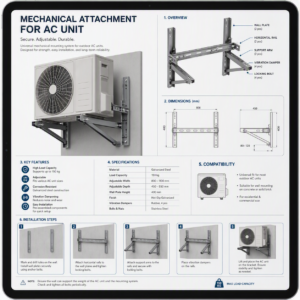
Mechanical Attachment for AC Unit to Pass Inspection
A mechanical attachment for an AC unit must provide a secure, stable mount that supports the equipment, protects the building, and meets inspection needs.
When an air-conditioning unit fails an inspection, the problem may not come from the cooling system itself. In many cases, inspectors look closely at how the unit connects to the building. A weak bracket, poor anchor, missing support, loose fastener, or unsafe clearance can create a clear inspection issue.
That is why a mechanical attachment for an AC unit to pass inspection should never be treated as a minor installation detail. The attachment must suit the equipment, structure, location, manufacturer instructions, and applicable building requirements.
With eAuditor Audits & Inspections, teams can also turn these checks into a clear digital inspection process. eAuditor's HVAC and mechanical checklists cover equipment condition, access, condensate systems, ductwork, controls, and other key inspection points.
What Is a Mechanical Attachment for an AC Unit?
A mechanical attachment is the hardware and support system that secures an AC component to its mounting surface or supporting structure.
Depending on the installation, it may include:
- Mounting brackets
- Steel or aluminum supports
- Equipment rails
- Anchor bolts
- Structural screws
- Vibration isolators
- Base frames
- Wall brackets
- Roof curbs
- Support stands
- Approved fasteners
- Equipment mounting plates
The exact arrangement depends on the AC unit and the building. Therefore, installers should follow the equipment manufacturer's installation instructions and the requirements that apply to the project.
A good attachment should keep the equipment stable during normal operation. It should also limit unwanted movement and vibration while allowing safe access for service.
Why AC Unit Attachment Matters During Inspection
An inspector does more than check whether an AC unit turns on. The inspection can also consider whether the equipment is properly installed and supported.
For example, the inspector may look for:
- Secure equipment mounting
- Correct anchoring
- Adequate working space
- Proper clearances
- Stable support surfaces
- Safe access for maintenance
- Correct condensate drainage
- Proper electrical connections
- Correct duct connections
- Signs of corrosion or damage
- Compliance with approved plans
- Installation according to manufacturer instructions
The Mechanical Rough-In Inspection Checklist available in the eAuditor library includes checks for permits and plans, working space, electrical provisions, duct support, duct sealing, insulation, return air, and air-conditioning requirements. (eAuditor)
How to Choose the Right Mechanical Attachment
Start by identifying the AC equipment and its mounting location. A wall-mounted outdoor unit needs a different support system from a rooftop unit or an indoor air-handling unit.
Next, check the manufacturer's installation requirements. These instructions can specify mounting methods, clearances, support points, fastener types, and vibration-control requirements.
Then assess the supporting structure. A bracket is only as reliable as the surface holding it. Masonry, concrete, steel, timber, and other materials require different anchoring methods.
Finally, confirm the installation against the approved plans and applicable local requirements. Do not assume that a bracket that works on one project will work on another.
Key Inspection Points for AC Mounting
A practical inspection should cover several areas.
1. Equipment support
Check that the AC unit sits firmly on its intended support. Look for movement, sagging, bent brackets, loose hardware, or damaged mounting points.
2. Anchors and fasteners
Inspect anchors, bolts, screws, nuts, and washers. Make sure installers use suitable hardware for the supporting material and application.
3. Structural condition
Examine the wall, slab, roof, frame, or platform that carries the equipment. Cracks, corrosion, water damage, or deterioration can affect the attachment.
4. Clearances
Confirm that the unit has the required clearance around it. Adequate space supports airflow and gives technicians room to inspect and service the equipment.
5. Vibration control
AC equipment can create vibration during operation. Suitable isolation can reduce noise, movement, and stress on the mounting structure.
6. Corrosion protection
Outdoor installations face rain, humidity, heat, and other environmental conditions. Inspect exposed metal supports and fasteners for rust or corrosion.
7. Condensate management
The attachment should not interfere with condensate drainage. The eAuditor Mechanical Rough-In Inspection Checklist specifically checks condensate disposal and related drainage provisions for air-conditioning systems.
8. Service access
A technically strong attachment can still create problems if it blocks access to filters, coils, electrical components, drains, or other service points.
Common Reasons an AC Mounting System Fails Inspection
Small installation mistakes can become major inspection findings.
One common problem is using a bracket without confirming its suitability for the equipment load. Another is anchoring the bracket into a weak or unsuitable substrate.
Poor clearance can also cause trouble. The unit may operate, but restricted access or airflow can still create a non-compliance issue.
Loose fasteners are another concern. Vibration can gradually loosen poorly installed hardware and affect the stability of the equipment.
Corrosion can weaken outdoor supports over time. Inspectors may also flag damaged brackets, unsupported pipework, poor drainage, or installation that differs from the approved design.
Mechanical Attachment Checklist for AC Inspection
Before requesting an inspection, review the following points:
- Confirm the correct AC model and installation location.
- Check the approved plans and mechanical drawings.
- Verify that the mounting method matches the design.
- Inspect the supporting wall, roof, slab, or frame.
- Confirm that anchors suit the supporting material.
- Check bolts, screws, nuts, washers, and other hardware.
- Look for loose, bent, cracked, or damaged components.
- Check required equipment clearances.
- Confirm safe service access.
- Inspect vibration isolation where required.
- Check exposed supports for corrosion.
- Verify condensate drainage.
- Check refrigerant and pipe supports.
- Confirm duct connections where applicable.
- Inspect electrical provisions.
- Compare the installation with manufacturer instructions.
- Record defects and corrective actions.
- Take photographs of important findings.
- Complete the inspection before the official inspection visit.
A digital checklist makes this process easier to repeat. It also creates a record that shows what the team checked, what failed, who corrected it, and when the correction was completed.
eAuditor Checklists for AC and Mechanical Inspections
Several eAuditor templates can support an AC installation and inspection program.
HVAC Inspection Checklist: This template covers a broad range of HVAC conditions. It includes mechanical rooms, controls, compressors, filters, condensate pans, cooling coils, ducts, fans, thermostats, dampers, and preventive maintenance. It also checks for refrigerant leaks, condensation problems, equipment access, and drainage.
HVAC Inspection Checklist – eAuditor Template
Mechanical Rough-In Inspection Checklist: This template helps teams check mechanical work before completion. It covers permits and plans, equipment working space, electrical provisions, duct support, insulation, return air, and specific air-conditioning requirements.
Mechanical Rough-In Inspection Checklist – eAuditor Template
Residential Mechanical Systems Inspection Checklist: This checklist focuses on residential mechanical installations. It includes permits and plans, appliance security, heating and cooling systems, duct insulation, sealed register boots, and energy-code requirements.
Residential Mechanical Systems Inspection Checklist – eAuditor Template
eAuditor also provides guidance on HVAC inspection and engineering testing. Its HVAC inspection content highlights systematic equipment checks, early defect detection, compliance verification, maintenance planning, and better inspection records.
HVAC Inspection Checklist Guide – eAuditor
HVAC Engineering Testing Checklist – eAuditor
How Digital AC Inspections Improve Compliance
Paper checklists can work, but they often make follow-up harder. A digital inspection gives the team a more consistent way to record findings.
With eAuditor, inspectors can capture inspection results, identify failed items, add evidence, and track corrective actions. This creates a useful inspection trail instead of leaving findings scattered across paper forms, emails, and spreadsheets.
The approach also helps maintenance teams spot repeat problems. If the same type of mounting defect appears across several AC units, managers can address the root cause instead of fixing each issue in isolation.
Best Practices Before the Inspector Arrives
Give the installation a final internal review before the official inspection.
Check the mounting system from the inspector's point of view. Is the equipment stable? Can the inspector see the anchors? Is the support structure accessible? Are the clearances obvious? Does the installation match the plans?
Next, check the surrounding mechanical work. Look at condensate drainage, ducts, pipe supports, electrical provisions, access panels, and equipment labels.
Most importantly, fix defects before the inspection rather than hoping they will go unnoticed. A short pre-inspection review can prevent delays, repeat visits, and unnecessary project costs.
Final Takeaway
A mechanical attachment for an AC unit to pass inspection is not simply a bracket or a set of bolts. It forms part of the complete mechanical installation and must provide safe, stable, and appropriate support.
Strong preparation starts with the equipment requirements, continues with proper structural attachment, and ends with a documented inspection. By combining sound installation practices with a digital checklist, teams can identify defects early and approach the inspection with much greater confidence.
Frequently Asked Questions
What is a mechanical attachment for an AC unit?
It is the hardware and support arrangement used to secure an AC unit or related component to its supporting structure. It can include brackets, anchors, bolts, rails, frames, and vibration-control components.
Can any AC bracket be used to pass inspection?
No. The bracket must suit the equipment, load, supporting structure, installation method, and applicable requirements. Always follow the manufacturer's instructions and project requirements.
What does an inspector check on an AC mounting system?
The inspector may check equipment support, anchors, fasteners, structural condition, clearances, service access, vibration control, corrosion, drainage, and compliance with approved plans.
Why does vibration matter for AC attachments?
AC equipment can produce vibration while operating. A suitable mounting system helps control movement and reduces stress on the equipment, fasteners, connections, and supporting structure.
Does condensate drainage affect an AC inspection?
Yes. Poor condensate drainage can create water damage and other problems. The eAuditor mechanical inspection template includes checks for condensate disposal and related drainage provisions.
Which eAuditor checklist is best for AC inspections?
The HVAC Inspection Checklist is a strong starting point because it covers equipment, controls, filters, condensate systems, cooling coils, ducts, fans, and preventive maintenance.
Can eAuditor help track failed AC inspection items?
Yes. A digital inspection workflow can help teams record findings, document evidence, assign corrective actions, and maintain inspection records.
Should the AC installation be checked before the official inspection?
Yes. A pre-inspection review helps identify loose hardware, poor support, clearance issues, drainage problems, and other defects before the inspector arrives. https://eauditor.app/2026/09/08/mechanical-attachment-for-ac-unit-to-pass-inspection/


Comments
Post a Comment