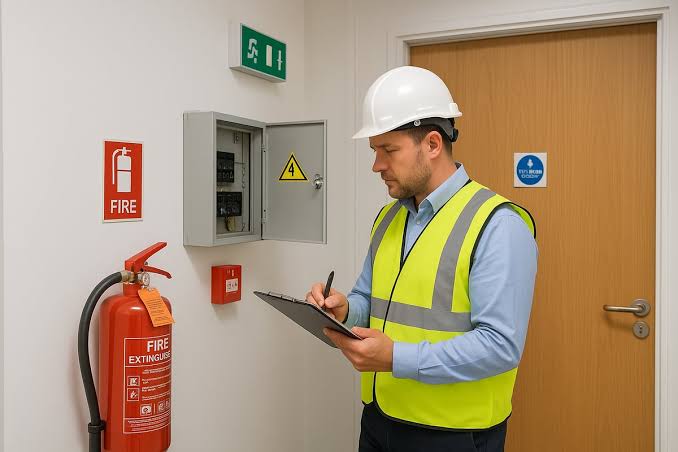
Comprehensive Fire Risk Assessment and Safety Audit Guide
Fire can turn a small problem into a major emergency in minutes. Therefore, every workplace needs a clear way to identify fire hazards, check fire controls, and improve emergency readiness. A Comprehensive Fire Risk Assessment and Safety Audit helps organizations look at fire safety from several angles. It covers ignition sources, combustible materials, people at risk, escape routes, fire protection equipment, emergency procedures, training, housekeeping, and maintenance records.
However, a fire risk assessment should not become a paperwork exercise. The goal is to find real risks and take action before an incident occurs.
With eAuditor Audits & Inspections, teams can move this process into a digital workflow. Inspectors can complete assessments on mobile devices, record hazards, add photos, assign corrective actions, track improvements, and generate clear reports.
eAuditor also provides a Fire Risk Assessment Checklist based on PAS 79 that covers building details, occupants, ignition sources, housekeeping, contractors, fire protection, records, and risk ratings.
What Is a Comprehensive Fire Risk Assessment?
A Comprehensive Fire Risk Assessment is a structured review of a building, workplace, process, or facility to identify fire hazards and determine whether existing controls provide adequate protection.
The assessment looks at both the chance of a fire starting and the possible consequences if one occurs.
A strong assessment asks questions such as:
- What could start a fire?
- What materials could fuel it?
- Who could be harmed?
- How could people escape?
- Are fire alarms working?
- Are extinguishers suitable and accessible?
- Are fire doors in good condition?
- Are emergency routes clear?
- Are employees trained?
- Are fire drills completed?
- Are inspection and maintenance records current?
- What actions are needed to reduce the risk?
The answers should lead to practical improvements.
Why Is a Fire Risk Assessment Important?
Fire safety problems can develop slowly.
For example, a fire exit may become blocked by stock. A damaged electrical cable may remain unnoticed. A fire door may stop closing correctly. Combustible waste may collect near an ignition source.
Each issue may seem small. However, several small failures can create a serious fire risk.
A regular assessment helps organizations:
- Identify fire hazards early.
- Reduce ignition sources.
- Control combustible materials.
- Protect people at increased risk.
- Maintain escape routes.
- Verify fire protection systems.
- Improve emergency preparedness.
- Track corrective actions.
- Support safety training.
- Maintain clear inspection records.
Furthermore, eAuditor's fire safety guidance recommends checking prevention measures, alarms, suppression systems, exits, evacuation procedures, and staff training as part of a structured inspection process.
Key Areas of a Comprehensive Fire Risk Assessment
A complete assessment should cover more than fire extinguishers and emergency exits.
1. Building Information
Start by recording basic information about the premises.
Include:
- Building name.
- Site address.
- Building use.
- Number of floors.
- Floor area.
- Construction type.
- Occupancy type.
- Areas assessed.
- Assessment date.
- Previous assessment date.
- Responsible person.
- Assessor name.
This information gives context to the assessment.
2. People at Risk
Next, identify the people who may be affected by a fire.
Consider:
- Employees.
- Contractors.
- Visitors.
- Customers.
- Children.
- Older people.
- People with disabilities.
- People with limited mobility.
- Sleeping occupants.
- Lone workers.
- People working in isolated areas.
- People who may need assistance during evacuation.
The eAuditor PAS 79 Fire Risk Assessment Checklist specifically includes occupants, sleeping occupants, disabled or less able occupants, children, and lone workers.
3. Sources of Ignition
Look for anything that could start a fire.
Check:
- Electrical equipment.
- Damaged cables.
- Overloaded outlets.
- Portable appliances.
- Heating systems.
- Machinery.
- Open flames.
- Hot surfaces.
- Welding equipment.
- Cutting equipment.
- Cooking equipment.
- Smoking materials.
- Static electricity.
- Temporary electrical connections.
Electrical safety deserves particular attention because faulty electrical equipment can become an ignition source.
4. Sources of Fuel
A fire needs fuel.
Therefore, identify combustible materials throughout the site.
Look for:
- Paper.
- Cardboard.
- Packaging.
- Wood.
- Plastics.
- Flammable liquids.
- Gas cylinders.
- Chemicals.
- Textiles.
- Waste.
- Stored products.
- Dust.
- Oily materials.
Then check whether these materials remain separated from ignition sources.
5. Housekeeping
Good housekeeping can reduce fire risk.
Check whether:
- Waste is removed regularly.
- Combustible waste does not accumulate.
- Storage areas remain organized.
- Flammable materials are stored correctly.
- Combustible materials remain away from heat.
- Access routes stay clear.
- Electrical panels remain accessible.
- Dust and debris are controlled.
The eAuditor PAS 79 checklist includes housekeeping checks for combustible materials, waste, hazardous materials, and storage arrangements.
6. Electrical Fire Risks
Electrical systems should receive specific attention.
Check:
- Fixed wiring inspections.
- Portable appliance testing where applicable.
- Damaged plugs.
- Damaged cables.
- Extension leads.
- Overloaded sockets.
- Multi-plug adaptors.
- Temporary electrical supplies.
- Electrical panels.
- Equipment maintenance.
- Electrical inspection records.
The PAS 79 eAuditor template includes checks for fixed wiring, portable appliances, trailing leads, personal electrical equipment, extension arrangements, and electrical testing records.
7. Fire Detection and Alarm Systems
Check whether the fire detection system can provide an effective warning.
Inspect:
- Fire alarm panels.
- Smoke detectors.
- Heat detectors.
- Manual call points.
- Alarm sounders.
- Visual alarm devices where required.
- Detector access.
- System testing.
- Maintenance records.
- Fault indicators.
Also confirm that staff know what to do when the alarm activates.
8. Fire Extinguishers
Fire extinguishers should be suitable, accessible, visible, and maintained.
Check:
- Correct extinguisher type.
- Location.
- Accessibility.
- Signage.
- Physical condition.
- Pressure indicator where applicable.
- Service status.
- Tamper seals.
- Inspection records.
- Staff awareness.
Do not assume that an extinguisher is ready simply because it is mounted on a wall.
9. Fire Doors
Fire doors can help slow the spread of fire and smoke.
Inspect:
- Door condition.
- Door closers.
- Hinges.
- Seals.
- Frames.
- Gaps.
- Labels.
- Hardware.
- Obstructions.
- Closing action.
A door that does not close correctly can create a serious weakness in the building's fire protection strategy.
10. Escape Routes
Emergency escape routes must remain usable.
Check:
- Corridors.
- Stairways.
- Final exits.
- Emergency doors.
- Exit signs.
- Emergency lighting.
- Assembly points.
- Access routes.
- Obstructions.
- Door operation.
The eAuditor Fire Risk Assessment Checklist includes checks for escape routes, final exits, emergency arrangements, and related fire safety controls.
11. Emergency Lighting
Emergency lighting should support safe evacuation when normal lighting fails.
Check:
- Emergency lights.
- Exit signs.
- Battery condition.
- Test records.
- Fault indicators.
- Coverage.
- Access to escape routes.
Record any failed units and assign corrective action.
12. Fire Suppression Systems
Where installed, inspect relevant suppression systems.
These may include:
- Sprinkler systems.
- Fire suppression systems.
- Fire hoses.
- Wet risers.
- Dry risers.
- Special hazard suppression systems.
Check equipment condition, access, signage, testing, maintenance, and records.
13. Contractors and Hot Work
Contractors can introduce new fire risks.
Review:
- Contractor fire safety requirements.
- Hot work permits.
- Welding controls.
- Cutting controls.
- Temporary electrical supplies.
- Gas cylinder storage.
- Combustible material control.
- Fire watch arrangements.
- Post-work monitoring.
The PAS 79 eAuditor template includes specific checks for contractor controls, building works, hot work, maintenance work, and storage of potentially harmful materials.
14. Emergency Procedures
Review the emergency plan.
Check:
- Alarm procedures.
- Evacuation procedures.
- Emergency contacts.
- Fire wardens.
- Assembly points.
- Evacuation responsibilities.
- Assistance for vulnerable people.
- Emergency communication.
- Fire brigade access.
- Emergency drills.
15. Fire Training
Employees should know what to do before an emergency happens.
Check whether employees understand:
- Alarm signals.
- Evacuation routes.
- Assembly points.
- Emergency contacts.
- Fire prevention rules.
- Fire extinguisher limitations.
- Reporting procedures.
- Their assigned emergency responsibilities.
16. Fire Drills
Fire drills provide a practical test of emergency readiness.
Review:
- Drill frequency.
- Attendance.
- Evacuation time.
- Problems encountered.
- Alarm performance.
- Staff response.
- Assembly point management.
- Lessons learned.
- Corrective actions.
The eAuditor PAS 79 checklist includes records for fire drills, fire training, alarm testing, emergency lighting testing, and maintenance of fire protection systems.
Comprehensive Fire Risk Assessment Checklist
Use this sample as a starting point. Adjust it to match the building, activities, hazards, and applicable requirements.
General Information
Building name recorded.
Location recorded.
Building use identified.
Number of floors recorded.
Floor areas recorded.
Responsible person identified.
Competent assessor identified.
Assessment date recorded.
Previous assessment reviewed.
Relevant documents available.
People at Risk
Employees identified.
Contractors identified.
Visitors considered.
Customers considered.
Vulnerable people identified.
People with mobility limitations considered.
Lone workers considered.
Sleeping occupants considered where applicable.
Personal emergency evacuation needs considered.
Fire Hazards
Ignition sources identified.
Electrical hazards reviewed.
Heating equipment checked.
Machinery checked.
Hot work controlled.
Smoking controls reviewed.
Flammable materials identified.
Combustible materials identified.
Waste storage reviewed.
Hazardous materials reviewed.
Housekeeping
Waste is removed regularly.
Combustible materials are controlled.
Storage areas are organized.
Flammable materials are stored safely.
Combustible materials are separated from ignition sources.
Electrical panels remain accessible.
Dust and debris are controlled.
Emergency routes remain clear.
Electrical Safety
Fixed wiring inspection is current.
Portable electrical equipment is inspected where required.
Cables are free from visible damage.
Sockets are not overloaded.
Extension leads are controlled.
Unsafe daisy-chaining is avoided.
Multi-plug adaptors are controlled.
Electrical records are available.
Fire Protection
Fire alarm system is operational.
Smoke detectors are unobstructed.
Heat detectors are unobstructed.
Manual call points are accessible.
Fire extinguishers are suitable.
Fire extinguishers are accessible.
Fire extinguishers are inspected.
Sprinklers are accessible where installed.
Fire hoses are accessible where installed.
Fire protection records are current.
Fire Doors and Escape Routes
Fire doors close correctly.
Fire doors are not damaged.
Door seals are in good condition.
Fire doors are not wedged open.
Escape routes are clear.
Final exits are accessible.
Exit doors operate correctly.
Exit signs are visible.
Emergency lighting is functional.
Assembly points are identified.
Emergency Preparedness
Emergency plan is available.
Emergency contacts are current.
Fire wardens are assigned.
Staff know evacuation procedures.
Vulnerable people have suitable arrangements.
Fire drills are completed.
Drill results are recorded.
Drill findings receive corrective action.
Fire brigade access is maintained.
Documentation
Fire alarm records are available.
Extinguisher service records are available.
Emergency lighting records are available.
Sprinkler records are available where applicable.
Fire door inspection records are available.
Training records are available.
Fire drill records are available.
Previous risk assessments are available.
Corrective action records are available.
How to Conduct a Fire Risk Assessment and Safety Audit
A good assessment follows a clear process.
Step 1: Define the Scope
First, identify the building, areas, activities, and systems that the assessment will cover.
Then identify the purpose of the audit.
For example, the assessment may support routine fire safety management, a new facility review, a compliance program, or a follow-up after corrective work.
Step 2: Review Existing Information
Before walking through the site, review:
- Previous fire risk assessments.
- Fire safety policies.
- Floor plans.
- Maintenance records.
- Fire alarm records.
- Fire extinguisher records.
- Fire drill reports.
- Training records.
- Previous audit findings.
- Incident reports.
This gives the assessor useful background.
Step 3: Identify Fire Hazards
Walk through the workplace and look for ignition sources and fuel.
Do not focus only on obvious hazards.
Check offices, kitchens, plant rooms, storage areas, workshops, electrical rooms, production areas, loading areas, waste areas, and external spaces.
Step 4: Identify People at Risk
Consider who uses the building and how they would respond during an emergency.
Pay particular attention to people who may need assistance.
Step 5: Inspect Fire Protection Measures
Check alarms, extinguishers, fire doors, emergency lighting, sprinklers, suppression systems, signs, and other controls.
Record evidence as you inspect each area.
Step 6: Review Escape Arrangements
Walk the evacuation routes.
Look for blocked corridors, locked exits, poor signage, damaged doors, missing emergency lighting, and other barriers.
Step 7: Evaluate the Risk
Consider both the likelihood of a fire and its potential consequences.
Then decide whether current controls provide adequate protection.
The eAuditor PAS 79 checklist includes separate hazard and consequence risk ratings and an overall risk estimate.
Step 8: Record Findings
Document every important finding.
Where useful, add:
- Photos.
- Notes.
- Location.
- Risk rating.
- Required action.
- Responsible person.
- Due date.
Step 9: Assign Corrective Actions
Do not stop at identifying the problem.
Assign actions to the appropriate person and track them until completion.
Step 10: Verify the Improvements
After corrective work, check the area again.
Then confirm whether the action actually reduced the risk.
Step 11: Generate the Final Report
Finally, create a clear report showing:
- Assessment details.
- Findings.
- Risk ratings.
- Photos.
- Corrective actions.
- Responsible persons.
- Outstanding issues.
- Recommendations.
- Final assessment.
Common Fire Safety Problems Found During Audits
Blocked Fire Exits
Storage often creeps into corridors and exit areas.
However, even temporary storage can slow evacuation.
Poor Housekeeping
Cardboard, waste, packaging, and combustible materials can increase the fire load.
Therefore, housekeeping should remain part of routine fire inspections.
Damaged Electrical Equipment
Damaged cables, overloaded outlets, and poor temporary electrical arrangements can create ignition risks.
Poor Fire Door Condition
A damaged closer, broken seal, or wedged-open door can weaken fire compartmentation.
Inaccessible Fire Extinguishers
An extinguisher cannot help if stock blocks access to it.
Missing or Outdated Records
Fire safety systems may be maintained, but missing records make it difficult to prove that inspections and tests occurred.
Inadequate Employee Training
People may know that fire safety matters but still not know what to do when an alarm sounds.
Weak Corrective Action Tracking
A risk assessment loses value when findings remain open for months.
Therefore, every important finding should have ownership and follow-up.
How eAuditor Audits & Inspections Handles Fire Risk Assessments
eAuditor Audits & Inspections helps organizations turn fire risk assessment into a repeatable digital process.
Create a Digital Fire Risk Assessment
Teams can build or customize a fire risk assessment that matches the site.
Sections can include:
- Building information.
- Occupants.
- Fire hazards.
- Ignition sources.
- Combustible materials.
- Fire protection.
- Escape routes.
- Emergency procedures.
- Training.
- Records.
- Risk ratings.
- Corrective actions.
eAuditor provides a PAS 79 Fire Risk Assessment Checklist that already covers many of these areas.
Complete Assessments on Mobile Devices
Inspectors can complete the assessment while walking through the facility.
They can record findings immediately rather than writing notes on paper and entering them later.
This helps keep information accurate and current.
Capture Photos of Fire Hazards
Photos can make findings much clearer.
For example, inspectors can photograph:
- Blocked exits.
- Damaged fire doors.
- Faulty equipment.
- Unsafe storage.
- Combustible waste.
- Fire extinguishers.
- Fire alarm panels.
- Emergency lighting.
- Electrical hazards.
eAuditor's fire risk assessment guidance specifically supports adding photos to document hazards and safety measures.
Record Comments and Observations
Not every finding fits into a simple Yes or No answer.
Inspectors can add comments to explain:
- What they found.
- Where they found it.
- Why it matters.
- What should be done.
Apply Risk Ratings
A structured risk rating helps management understand which problems need the most attention.
The PAS 79 template includes hazard risk, consequence risk, and an overall risk estimate.
Assign Corrective Actions
Once a problem is identified, create a corrective action.
Set:
- Action description.
- Responsible person.
- Priority.
- Due date.
- Supporting evidence.
- Completion status.
This turns the audit into an improvement process rather than a simple inspection.
Track Open Findings
Management can monitor outstanding issues and follow up with responsible teams.
This is especially useful for organizations that manage multiple buildings or sites.
Generate Detailed Reports
After completing the assessment, teams can generate a report containing findings, photos, recommendations, and corrective actions.
eAuditor's fire risk assessment guidance describes generating detailed reports and sharing them with relevant stakeholders for review and follow-up. https://eauditor.app/2026/10/08/comprehensive-fire-risk-assessment-and-safety-audit/


Comments
Post a Comment