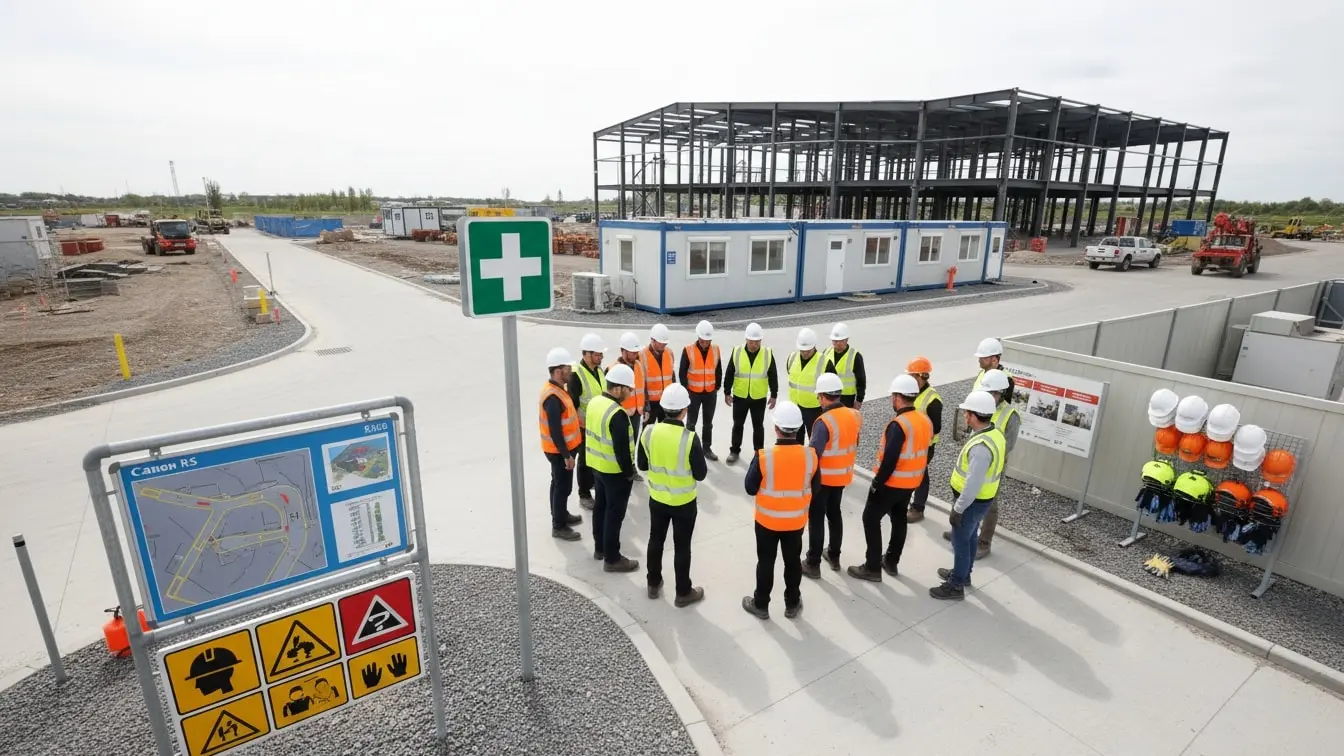
Construction Site Safety Induction Checklist Guide
A construction site can change every day. New workers arrive. New contractors start work. Equipment moves. Work areas change. New hazards can also appear. Because of this, every worker needs clear information before starting work. A Construction Site Safety Induction Checklist helps supervisors explain site rules, hazards, emergency procedures, PPE requirements, access routes, and reporting processes in a consistent way.
More importantly, a good induction does not simply give workers information. It helps confirm that they understand what the site expects from them.
With eAuditor Audits & Inspections, construction teams can turn the induction process into a clear digital workflow. Teams can customize induction checklists, record worker details, capture evidence, confirm completion, and keep organized records for future review.
What Is a Construction Site Safety Induction Checklist?
A Construction Site Safety Induction Checklist is a structured guide used to introduce workers, contractors, subcontractors, and other authorized people to a construction site before they begin work.
The checklist helps the person conducting the induction cover the key information that each person needs to work safely.
A typical induction can cover:
- Site and project information
- Worker and contractor details
- Site access procedures
- Site rules
- Required PPE
- Main site hazards
- Work areas and restricted zones
- Traffic and pedestrian routes
- Emergency procedures
- Fire safety
- First aid
- Welfare facilities
- Hazard and incident reporting
- Environmental controls
- Work permits
- Task-specific requirements
- Worker confirmation and signatures
Therefore, the checklist creates a repeatable process instead of relying on memory or informal conversations.
The verified eAuditor Construction Site Induction Template includes worker details, site rules, PPE, emergency procedures, fire safety, hazards, welfare facilities, final confirmation, and post-induction records.
Why Is a Construction Site Safety Induction Checklist Important?
Construction sites contain many changing risks. A worker who understands one part of the site may not understand another.
For example, a new worker may know how to perform a specific task but may not know where the emergency assembly point is. They may also be unfamiliar with vehicle routes, restricted areas, site-specific PPE rules, or reporting procedures.
A structured induction helps close these gaps.
It can help organizations:
- Explain site rules clearly
- Introduce workers to site-specific hazards
- Improve safety awareness
- Support consistent training
- Confirm that workers received key information
- Explain emergency procedures
- Reduce missed induction topics
- Improve communication
- Record worker participation
- Support contractor management
- Create better safety records
- Strengthen overall site control
Moreover, induction should not be treated as a one-time formality. Construction conditions change. Therefore, teams should update their communication when work activities, hazards, layouts, or site controls change.
What Should a Construction Site Safety Induction Checklist Include?
A useful checklist should cover the information that workers actually need.
The exact content should depend on the project, work activities, site conditions, and applicable requirements.
1. General Site Information
Start with basic information about the induction.
Include:
- Project name
- Site name
- Site location
- Date of induction
- Inductor name
- Worker name
- Employer or contractor
- Job title
- Work scope
- Contact details
- Project manager
- Site supervisor
These details make the induction record easier to identify later.
The verified eAuditor Construction Site Induction Template uses fields for the induction date, inductor, inductee, company, job role, work scope, site location, and project information.
2. Worker Identity and Competency
Before work begins, confirm that the person has the qualifications or authorizations required for their role.
Check:
- Identity verification
- Required licenses
- Relevant certifications
- Competency records
- Equipment operator authorization
- Required training
- Contractor documentation
- Site access authorization
This step is especially important when workers will operate machinery, perform high-risk work, or enter controlled areas.
3. Site Access and Security
Workers should know how to enter, leave, and move around the site.
Explain:
- Approved entry points
- Sign-in procedures
- Sign-out procedures
- Visitor requirements
- Site passes
- Security controls
- Restricted areas
- Authorized work zones
- Emergency access routes
Clear access rules help prevent unauthorized movement and reduce confusion.
4. Site Rules and Conduct
Every project has rules that workers need to understand.
The induction may cover:
- Speed limits
- Smoking restrictions
- Mobile phone rules
- Alcohol and drug policies
- Housekeeping requirements
- Waste disposal
- Site behavior
- Work authorization
- Restricted areas
- Reporting requirements
- Stop-work expectations
Keep these rules simple. Workers should be able to understand them quickly and apply them during normal work.
5. Personal Protective Equipment
PPE requirements should be explained before workers enter relevant work areas.
Depending on the project, PPE may include:
- Safety helmets
- Safety footwear
- High-visibility clothing
- Gloves
- Safety glasses
- Face protection
- Hearing protection
- Respiratory protection
- Fall protection equipment
The checklist should also explain when PPE is required and what workers should do if equipment is damaged or unsuitable.
The eAuditor Construction Site Induction Template specifically includes PPE requirements as part of the induction process.
6. Site Hazards and Risk Controls
Workers need to understand the main hazards they may encounter.
Depending on the project, these may include:
- Falls from height
- Excavations
- Moving vehicles
- Mobile plant
- Lifting operations
- Electrical hazards
- Temporary power
- Falling objects
- Confined spaces
- Hazardous substances
- Manual handling
- Slips and trips
- Structural hazards
- Demolition activities
- Environmental hazards
However, do not provide only generic information.
Explain the actual hazards present on the site.
The eAuditor Construction Site Risk Assessment Checklist includes site induction and toolbox talks alongside daily risk assessment, pedestrian safety, vehicle safety, plant safety, first aid, emergency arrangements, PPE, permits, hazardous substances, excavations, and environmental controls.
7. Traffic and Pedestrian Safety
Construction sites often have vehicles and pedestrians sharing limited space.
The induction should explain:
- Pedestrian routes
- Vehicle routes
- Crossing points
- Loading areas
- Reversing controls
- Plant operating zones
- Parking areas
- Speed limits
- Traffic signs
- Restricted routes
Workers should understand where they can safely walk and where they must stay away from moving equipment.
8. Emergency Procedures
Workers need clear instructions for emergencies.
Cover:
- Emergency alarms
- Emergency contacts
- Evacuation routes
- Emergency exits
- Muster points
- Communication procedures
- Severe weather procedures
- Site emergency plans
- Rescue arrangements
- Reporting procedures
The eAuditor Construction Site Risk Assessment Checklist includes checks for nominated first aiders, suitable muster points, and emergency arrangements.
9. Fire Safety
Fire information should be practical.
Explain:
- Fire alarm procedures
- Fire evacuation routes
- Fire assembly points
- Fire equipment locations
- Hot-work controls
- Smoking restrictions
- Emergency contacts
- Fire prevention requirements
Workers should know what to do when they hear an alarm rather than trying to remember instructions during an emergency.
10. First Aid
The induction should identify how workers can obtain medical assistance.
Explain:
- First aid kit locations
- First aid station locations
- Names or roles of first aiders
- Emergency contact details
- Injury reporting procedures
- Emergency access arrangements
Also, make sure workers know how to report injuries and near misses.
11. Welfare Facilities
Workers should know where basic facilities are located.
These can include:
- Toilets
- Drinking water
- Washing facilities
- Eating areas
- Rest areas
- Changing areas
- Break facilities
Good welfare information makes the induction more practical and helps workers settle into the site.
12. Hazard and Incident Reporting
Workers should know how to report unsafe conditions.
The induction should explain how to report:
- Hazards
- Near misses
- Injuries
- Incidents
- Damaged equipment
- Unsafe behavior
- Environmental issues
- New site risks
Also, explain who receives the report and what workers should do if an immediate danger exists.
Construction Site Safety Induction Checklist Example
A simple checklist can include the following sections.
General Information
- Site name
- Project name
- Site address
- Date
- Inductor
- Worker name
- Employer
- Job title
- Work scope
Worker Verification
- Identity verified
- Required licenses checked
- Required certifications checked
- Competency confirmed
- Site access approved
Site Access
- Entry and exit points explained
- Sign-in process explained
- Sign-out process explained
- Restricted areas explained
- Site security requirements explained
Safety Rules
- Site rules explained
- Speed limits explained
- Smoking rules explained
- Mobile phone rules explained
- Housekeeping requirements explained
- Reporting procedures explained
PPE
- Required PPE explained
- PPE condition checked
- PPE use explained
- Damaged PPE reporting explained
Site Hazards
- Work-at-height hazards explained
- Excavation hazards explained
- Vehicle hazards explained
- Plant hazards explained
- Electrical hazards explained
- Hazardous substance risks explained
- Manual handling risks explained
Emergency Procedures
- Emergency alarms explained
- Evacuation routes explained
- Muster point identified
- Emergency contacts provided
- First aid arrangements explained
- Fire procedures explained
Worker Confirmation
- Worker questions addressed
- Worker understanding confirmed
- Worker signature captured
- Inductor signature captured
- Additional comments recorded
How to Conduct a Construction Site Safety Induction
A good induction should feel like a conversation, not simply a form-filling exercise.
Step 1: Prepare the Induction
Review the current site conditions before the worker arrives.
Check:
- Current work activities
- New hazards
- Site layout
- Emergency arrangements
- Traffic routes
- Restricted areas
- Current permits
- PPE requirements
This helps keep the induction relevant.
Step 2: Verify the Worker
Confirm the worker's identity, role, employer, qualifications, and required authorizations.
Then, confirm that the person has the competency needed for the work they will perform.
Step 3: Explain the Site
Walk through the site rules, access points, work zones, facilities, traffic routes, and restricted areas.
Where possible, show workers the actual locations instead of relying only on verbal explanations.
Step 4: Explain the Main Hazards
Focus on the risks that the worker may actually encounter.
For example, a worker assigned to excavation activities needs clear information about excavation controls. Likewise, someone working near mobile plant needs to understand traffic controls and exclusion zones.
Step 5: Explain Emergency Procedures
Show workers:
- Emergency exits
- Muster points
- First aid locations
- Fire equipment
- Emergency contacts
Then explain what they should do when an emergency occurs.
Step 6: Confirm Understanding
Do not assume that receiving information means understanding it.
Give workers time to ask questions.
Ask them to explain key procedures where appropriate. This can help supervisors identify gaps before the worker starts work.
Step 7: Record Completion
Record the completed induction.
Capture the required:
- Date
- Worker details
- Inductor details
- Confirmation
- Signatures
- Comments
- Supporting evidence
The eAuditor Construction Site Induction Template includes final confirmation, questions or concerns, signatures, additional notes, and post-induction recordkeeping.
Common Problems With Construction Site Inductions
Even when companies have an induction process, several problems can reduce its value.
Incomplete Induction Records
Paper forms can become lost, damaged, or difficult to retrieve.
A digital record provides a more organized way to retain completed information.
Generic Information
A generic induction may not reflect the current site.
Therefore, update the checklist when the site layout, work activities, hazards, or controls change.
Rushed Inductions
A short induction is not automatically a good induction.
Workers need enough time to understand the information that affects their work.
Poor Follow-Up
An induction can explain a rule, but supervisors still need to check that workers follow it.
Regular site inspections and toolbox talks can reinforce the information provided during induction.
Missing Contractor Records
Construction projects often involve multiple contractors and subcontractors.
Therefore, teams need a reliable process for confirming who has completed the required induction.
No Evidence of Understanding
A signature alone may not show that a worker understood the information.
Include questions, confirmations, comments, or other suitable fields where useful.
How eAuditor Audits & Inspections Handles Construction Site Safety Induction Checklists
eAuditor Audits & Inspections helps construction teams move site inductions from paper-based processes to structured digital workflows.
The verified eAuditor Construction Site Induction Template can be customized with fields such as Yes/No questions, dropdowns, image uploads, and mandatory fields.
Create a Customized Induction Checklist
Construction companies can build an induction checklist around their own project requirements.
For example, teams can include sections for:
- Worker details
- Project information
- Site rules
- PPE
- Hazards
- Emergency procedures
- Fire safety
- First aid
- Welfare
- Environmental controls
- Reporting
- Final confirmation
This helps each project use a process that fits its actual needs.
Capture Digital Responses
Instead of relying on paper forms, teams can record induction information digitally.
Depending on the checklist design, teams can use:
- Yes/No responses
- Dropdown fields
- Text fields
- Required fields
- Ratings
- Photos
- Signatures
- Comments
As a result, supervisors can create more complete and consistent records.
Use Evidence Where It Adds Value
Some induction topics may benefit from supporting evidence.
For example, teams may capture a photo of:
- Site signage
- Emergency information
- PPE
- Site maps
- Designated access points
- Safety controls
The evidence can help provide additional context when managers review the record.
Keep Induction Records Organized
Digital records make it easier to review completed inductions.
Managers can use records to understand:
- Who completed an induction
- When the induction occurred
- Which project it covered
- What information was confirmed
- What comments were recorded
This becomes especially useful when many workers and contractors are working across different projects.
Connect Induction With Site Safety Checks
Induction should work alongside broader construction safety processes.
The eAuditor template library includes construction risk assessment, site inspection, safety walkthrough, and construction safety resources.
Therefore, teams can build a broader safety workflow around:
Induction → Risk Assessment → Daily Checks → Safety Inspections → Corrective Actions → Follow-Up
This approach helps turn induction into part of an ongoing safety system rather than a standalone form.
Support Consistent Contractor Management
Contractors may arrive at different times and work under different supervisors.
A standardized digital checklist helps each person receive the same core site information.
Consequently, organizations can reduce the risk of important induction topics being skipped.
Improve Site Safety Visibility
Construction managers need to know what is happening across the project.
Digital inspection and induction records can provide a clearer view of completed processes, identified issues, and required follow-up.
The eAuditor Construction Safety Inspection resource also highlights the value of structured digital construction safety inspections and checklists for monitoring site conditions and recurring safety issues.
Benefits of Using a Construction Site Safety Induction Checklist
A well-designed checklist can provide several practical benefits.
Better Worker Awareness
Workers receive clear information before they start.
More Consistent Inductions
Supervisors can follow the same core process.
Fewer Missed Topics
The checklist acts as a guide during the induction.
Better Documentation
Teams maintain clearer records of completed inductions.
Improved Contractor Control
Organizations can track induction requirements across multiple contractors.
Faster Record Retrieval
Digital records reduce the need to search through paper files.
Stronger Accountability
The process can identify who conducted and completed the induction.
Better Safety Communication
Workers receive information about actual site hazards and procedures.
Easier Follow-Up
Comments, findings, and supporting evidence can help managers identify areas that need attention.
Best Practices for Construction Site Safety Inductions
Follow these practices to make the process more useful.
Keep the Checklist Site-Specific
Avoid using a generic checklist without reviewing the actual site.
Use Simple Language
Workers should understand every instruction.
Focus on Real Hazards
Discuss risks that workers may actually encounter.
Update the Checklist
Change the checklist when site conditions or work activities change.
Make Important Fields Mandatory
Required fields can help prevent incomplete records.
Allow Questions
A good induction should encourage workers to raise concerns.
Use Photos When Helpful
Visual evidence can support important observations.
Connect Induction With Daily Safety
Use toolbox talks, risk assessments, and site inspections to reinforce the induction.
Review Induction Records
Managers should periodically check whether the process works as intended.
Keep Improving
Use recurring findings and worker feedback to improve the induction process.
Frequently Asked Questions
1. What is a Construction Site Safety Induction Checklist?
It is a structured checklist used to introduce workers, contractors, and other authorized people to site rules, hazards, PPE, emergency procedures, access controls, and other safety requirements before they begin work.
2. Why is construction site induction important?
It helps workers understand the specific risks and rules of the site. https://eauditor.app/2026/10/06/construction-site-safety-induction-checklist-guide/


Comments
Post a Comment