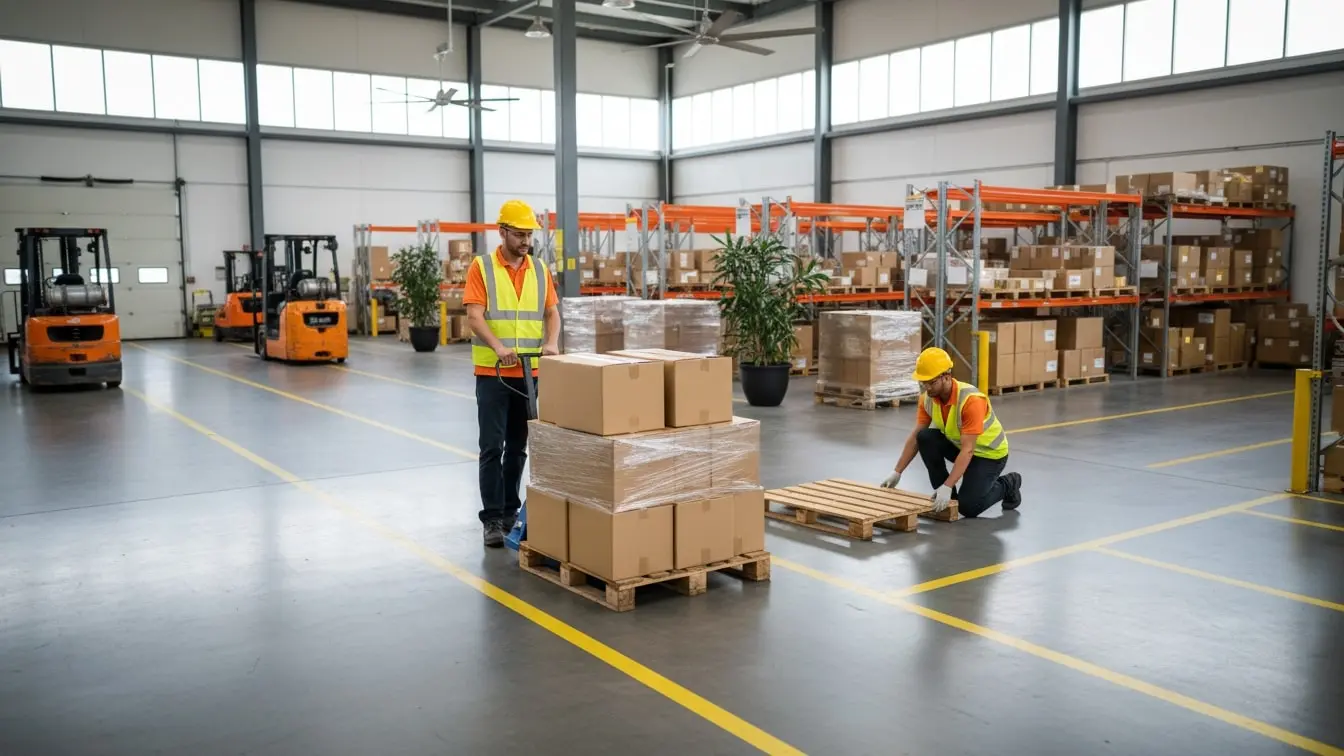
General Safety Observation Report: A Complete Guide
Workplace safety starts with noticing risks before they cause harm. However, hazards can go unnoticed when teams focus only on daily tasks. A loose cable, blocked walkway, unsafe lifting method, or missing protective equipment can quickly lead to an incident. A General Safety Observation Report helps workers and supervisors record unsafe conditions, unsafe behaviors, and positive safety practices. It also helps organizations identify recurring problems and take action before someone gets hurt.
With eAuditor Audits & Inspections, teams can use digital checklists to record observations, document findings, and track corrective actions. As a result, they can improve safety reporting and build a stronger culture of prevention.
What Is a General Safety Observation Report?
A General Safety Observation Report is a document used to record workplace conditions and behaviors that affect health and safety. It captures what an observer sees, where the observation occurs, and what action may be needed.
For example, a worker may notice that materials block an emergency exit. A supervisor can record the issue, arrange for the obstruction to be removed, and check that the exit remains clear.
The report can also record positive observations. For instance, an employee may wear the required personal protective equipment (PPE), follow a safe work procedure, or report a hazard promptly.
Therefore, the report should not focus only on mistakes. It should also recognize good practices and help teams learn from everyday work.
Why Is a General Safety Observation Report Important?
Regular safety observations help organizations identify risks before they cause injuries, damage, or operational delays. In addition, they give employees a practical way to raise concerns.
A well-managed reporting process helps organizations:
- Identify hazards early: Workers can report unsafe conditions before an incident occurs.
- Improve safe behaviors: Supervisors can provide timely feedback and coaching.
- Reduce repeat problems: Teams can review previous findings and address common causes.
- Strengthen accountability: Reports can identify who needs to take action and when.
- Improve communication: Workers and managers can share safety concerns more clearly.
- Support compliance: Records can help demonstrate that inspections and corrective actions took place.
- Recognize good practices: Positive observations reinforce safe working habits.
- Support continuous improvement: Trend reviews can help teams improve procedures and training.
However, recording a hazard is only the first step. Teams must assess the risk, take suitable action, and verify that the problem has been addressed.
Who Uses a General Safety Observation Report?
Many people can contribute to workplace safety observations. Their roles depend on the organization, industry, and level of risk.
- Employees: Report hazards and identify safe or unsafe work practices.
- Supervisors: Observe work activities and address immediate concerns.
- Health and Safety Officers: Review reports, assess risks, and recommend controls.
- Site Managers: Coordinate corrective actions and provide resources.
- Contractors: Report hazards within their work areas and follow site procedures.
- Maintenance Teams: Address equipment defects and unsafe physical conditions.
- Quality and Compliance Teams: Review records and identify recurring issues.
- Senior Management: Use observation trends to support safety improvements.
Everyone should know how to report a concern. In addition, workers should be encouraged to speak up without fear of unfair treatment.
What Should a General Safety Observation Report Include?
A useful report should be clear, factual, and easy to complete. It should capture enough information for the organization to understand the concern and decide what to do next.
1. Basic Observation Details
Start by recording the date, time, location, and name or role of the observer, according to company policy.
These details help the team understand when and where the observation occurred. They also support follow-up if the issue needs further investigation.
2. Description of the Observation
Describe the condition or behavior that you observed. Use specific facts rather than assumptions or blame.
For example, write “A power cable crosses the pedestrian walkway near the packing station” instead of “The area is unsafe.”
A clear description helps the responsible team identify the issue and select suitable controls.
3. Observation Category
Classify the finding so that teams can review similar issues together.
Common categories include:
- Unsafe conditions
- Unsafe acts or behaviors
- Housekeeping
- Personal protective equipment
- Equipment and machinery
- Manual handling
- Fire and emergency arrangements
- Electrical safety
- Chemical handling
- Work at height
- Traffic and vehicle movement
- Positive safety observations
Use categories that match the organization's risks and reporting process.
4. Risk Assessment
Record the level of risk using the organization's approved risk assessment method. Consider the possible severity of harm and the likelihood of the event occurring.
For example, a blocked emergency exit may need immediate attention. A minor labeling issue may require a planned correction, depending on its consequences.
Do not use a risk rating as a substitute for immediate action when a serious hazard exists.
5. Immediate Action Taken
Record any action taken at the time of the observation.
For example, the observer may warn nearby workers, arrange for an obstruction to be removed, or notify a supervisor. Follow the organization's procedures and do not attempt work beyond your training or authority.
6. Recommended Corrective Action
Describe what needs to change to control the risk. Whenever possible, address the cause rather than relying only on reminders.
For instance, repeated obstructions in a walkway may require a designated storage area, clearer markings, and routine checks.
7. Responsible Person and Due Date
Assign each corrective action to an appropriate person or team. Then, set a completion date based on the risk and the work required.
Clear ownership helps prevent important actions from being overlooked.
8. Verification and Closure
Finally, record whether the action has been completed and checked. If the hazard remains, keep the issue open and escalate it according to the organization's procedures.
This final step helps ensure that reports lead to meaningful improvements.
General Safety Observation Report: Sample Checklist
Use the following checklist as a starting point for workplace observations. Adapt it to the site, equipment, activities, and hazards involved.
Observation item
Safe
Needs action
Notes
Walkways and work areas are clear
☐
☐
Floors are clean and free from avoidable hazards
☐
☐
Emergency exits are accessible
☐
☐
Fire extinguishers and emergency equipment are accessible
☐
☐
Workers use required PPE correctly
☐
☐
Tools and equipment appear suitable for use
☐
☐
Damaged equipment is reported and controlled
☐
☐
Materials are stored securely
☐
☐
Electrical cables and equipment are managed safely
☐
☐
Chemicals are labeled and stored correctly
☐
☐
Manual handling follows approved procedures
☐
☐
Safety signs and instructions are visible
☐
☐
Workers follow relevant safe work procedures
☐
☐
Hazards are reported promptly
☐
☐
Positive safety practices are recognized
☐
☐
Suggested report fields
- Organization or site:
- Department or work area:
- Date and time:
- Observer:
- Observation category:
- Description of the finding:
- Potential consequence:
- Risk rating:
- Immediate action:
- Recommended corrective action:
- Responsible person:
- Target completion date:
- Verification notes:
- Closure status:
Not every checklist item will apply to every work area. Mark items as not applicable where appropriate, and use separate specialist checklists when a task requires a more detailed assessment.
Examples of General Safety Observations
Practical examples help workers understand what to record and how to report it.
Example 1: Blocked Walkway
Observation: Several boxes are stored in a marked pedestrian walkway near the warehouse entrance.
Potential risk: Workers may trip, and pedestrian movement may be restricted.
Immediate action: Notify the responsible supervisor and arrange for the boxes to be moved to an approved storage area.
Corrective action: Review storage arrangements and reinforce the rule that walkways must remain clear.
Follow-up: Check the area during a later inspection to confirm that the obstruction has not returned.
Example 2: Missing Personal Protective Equipment
Observation: A worker is performing a task that requires safety glasses but is not wearing them.
Potential risk: The worker may suffer an eye injury.
Immediate action: Follow site procedures to stop or pause the task where necessary, notify the supervisor, and ensure the required protection is used before work resumes.
Corrective action: Confirm that suitable PPE is available and that the worker understands the task requirements.
Follow-up: Observe the activity again to verify that the required PPE is used correctly.
Example 3: Damaged Equipment
Observation: A damaged hand tool is found in a shared equipment cabinet.
Potential risk: The tool may fail during use and cause injury.
Immediate action: Remove the tool from service according to the organization's procedure and alert the responsible person.
Corrective action: Inspect the tool, arrange repair or replacement, and review how defective tools are identified and stored.
Follow-up: Confirm that the damaged tool is no longer available for use and that the replacement is suitable.
Example 4: Positive Safety Behavior
Observation: A worker notices a liquid spill, warns nearby staff, and reports it through the approved process.
Positive outcome: The hazard is identified early, and the area can be controlled before someone slips.
Recommended action: Recognize the worker's prompt response and confirm that the spill is handled using the correct procedure.
Follow-up: Review whether the source of the spill requires further action.
How to Complete a General Safety Observation Report
A consistent process helps teams create useful reports and respond to hazards quickly.
Step 1: Observe the Work Area
Look at the actual conditions and behaviors. Check walkways, equipment, materials, work methods, PPE, and emergency access where relevant.
Observe respectfully and avoid disrupting work unless an immediate safety concern requires intervention.
Step 2: Identify the Hazard or Good Practice
Determine whether the observation involves an unsafe condition, an unsafe behavior, a process gap, or a positive safety practice.
Be specific. Describe what happened or what you saw rather than guessing why someone acted a certain way.
Step 3: Take Immediate Action When Needed
If the observation reveals an immediate danger, follow the site's emergency and hazard-control procedures. Warn affected people and contact the responsible supervisor.
Do not delay urgent controls simply to complete the report.
Step 4: Record the Facts
Write a short, clear description. Include the location, relevant circumstances, potential consequences, and any immediate action taken.
Where evidence is useful and permitted, add supporting details such as a reference number or photograph. Avoid collecting unnecessary personal or confidential information.
Step 5: Assess the Risk
Use the organization's approved risk matrix or assessment procedure. Consider how serious the potential harm could be and how likely it is to occur.
If the risk is unclear or beyond your authority, refer it to a qualified person.
Step 6: Assign Corrective Actions
Define the action required, the person responsible, and the target date. Prioritize actions based on risk and follow the organization's escalation rules.
Where possible, remove the hazard or use an effective control rather than relying only on signs or verbal reminders.
Step 7: Verify Completion
Check whether the action was completed and whether it controls the risk. If it does not, revise the action and escalate the issue.
Finally, review recurring observations to identify wider problems with training, equipment, procedures, or work design.
Common Mistakes When Preparing Safety Observation Reports
Reports are most useful when they provide accurate information and lead to practical action. Avoid these common mistakes.
- Writing vague descriptions: Replace “poor housekeeping” with a specific description of the condition and location.
- Blaming workers: Focus on observable facts and contributing factors rather than personal criticism.
- Ignoring positive observations: Record safe behaviors to reinforce good practices.
- Failing to act immediately: Control urgent hazards before focusing on documentation.
- Using inconsistent risk ratings: Apply the organization's approved risk assessment method.
- Leaving actions unassigned: Give each corrective action a responsible person and due date.
- Closing issues too early: Verify that the control works before closing the report.
- Ignoring repeat findings: Investigate the underlying causes of recurring problems.
- Collecting unnecessary personal data: Keep reports relevant and protect confidential information.
- Using reports to punish good-faith reporting: Encourage workers to raise concerns and use findings to improve safety.
How eAuditor Audits & Inspections Supports General Safety Observation Reporting
eAuditor Audits & Inspections can help organizations organize safety observations through digital checklists and structured records. Teams can adapt checklist questions to match their workplace risks and internal procedures.
Create Digital Safety Observation Checklists
Build a checklist for general workplace observations or create separate versions for areas such as warehouses, offices, construction sites, workshops, and production floors.
This helps teams use relevant questions instead of relying on a single checklist for every activity.
Record Findings and Supporting Notes
Inspectors can record results and add notes that explain each finding. Where supported by the selected workflow, they can also attach photos or other evidence.
For example, an observer can document a blocked walkway or missing safety sign. Any evidence should be collected in line with company privacy and information-handling rules.
Document Corrective Actions
When an observation identifies a problem, the team can record what needs to happen next. This may include removing a hazard, arranging maintenance, updating a procedure, or providing training.
A structured record helps clarify responsibility and provides a basis for follow-up.
Review Recurring Issues
Managers can review completed observations to identify patterns. For example, repeated reports of blocked walkways may indicate that the current storage layout does not meet operational needs.
Teams can then investigate the cause and decide whether to change the layout, clarify responsibilities, or improve supervision.
Support Follow-Up and Accountability
A documented workflow can help teams track actions and verify completion. This reduces the chance that findings remain unresolved after the original observation.
However, urgent hazards must still be managed promptly under site procedures. A digital report does not replace immediate risk controls, emergency response, or specialist safety assessments.
Important: eAuditor supports digital inspection and observation workflows. Organizations remain responsible for risk assessment, incident response, legal compliance, and implementing effective workplace safety controls.
Benefits of Using a Digital Safety Observation Report
A digital reporting process can make safety observations easier to document and manage.
- Consistent reporting: Teams can use standard questions and categories.
- Clearer documentation: Specific notes help explain the observation.
- Better action tracking: Assigned responsibilities help teams follow up on findings.
- Improved visibility: Managers can review recurring hazards and common process gaps.
- Stronger communication: Workers and supervisors can work from a shared record.
- Support for learning: Reports can identify training and procedure improvement needs.
- Recognition of safe practices: Teams can document positive behaviors as well as hazards.
- Continuous improvement: Follow-up reviews help determine whether changes are effective.
These benefits depend on accurate reporting, timely action, and a workplace culture that encourages employees to raise concerns.
Best Practices for General Safety Observation Reporting
To improve your reporting process, follow these practical steps:
- Use clear language. Describe the condition or behavior in plain, factual terms.
- Focus on prevention. Treat observations as an opportunity to remove risks and improve work.
- Encourage participation. Make it easy for employees and contractors to report concerns.
- Act on serious hazards promptly. Follow site procedures and do not wait for routine reporting.
- Apply consistent criteria. Use approved categories and risk assessment methods.
- Recognize good practices. Reinforce behaviors that help keep people safe.
- Assign every required action. Define ownership and realistic completion dates.
- Verify effectiveness. Check that corrective actions control the identified risk.
- Review trends. Look for repeated issues and investigate their underlying causes.
- Protect confidentiality. Limit access to reports and collect only relevant information.
Frequently Asked Questions
1. What is a General Safety Observation Report?
It is a record of workplace conditions or behaviors that affect safety. It helps teams document hazards, recognize positive practices, and identify actions that can reduce risk.
2. What should a safety observation report include?
It should include the date, location, observer, description, observation category, potential risk, immediate action, recommended corrective action, responsible person, due date, and follow-up result.
3. What is the difference between a safety observation and an incident report?
A safety observation records a condition or behavior that may create risk, often before harm occurs. An incident report documents an event such as an injury, near miss, or property damage, according to the organization's reporting rules.
4. Who can complete a safety observation report?
Employees, supervisors, safety officers, contractors, and other authorized personnel can submit observations. Organizations should explain how to report hazards and when to contact a supervisor immediately.
5. How often should safety observations be conducted?
The frequency depends on workplace risks, operating conditions, and company procedures. Teams may conduct observations during routine work, planned inspections, safety walks, or after identifying recurring concerns.
6. What are examples of unsafe conditions?
Examples include blocked exits, damaged tools, exposed electrical hazards, spills, unstable storage, missing safety signs, and inadequate guarding. The specific risks depend on the workplace and activity.
7. Should a safety observation report include positive feedback?
Yes. Recording safe practices helps recognize good behavior and encourages employees to maintain effective safety habits. A balanced process should address hazards while also reinforcing what works well.
8. How do you prioritize safety observations? https://eauditor.app/2026/10/24/general-safety-observation-report-a-complete-guide/


Comments
Post a Comment