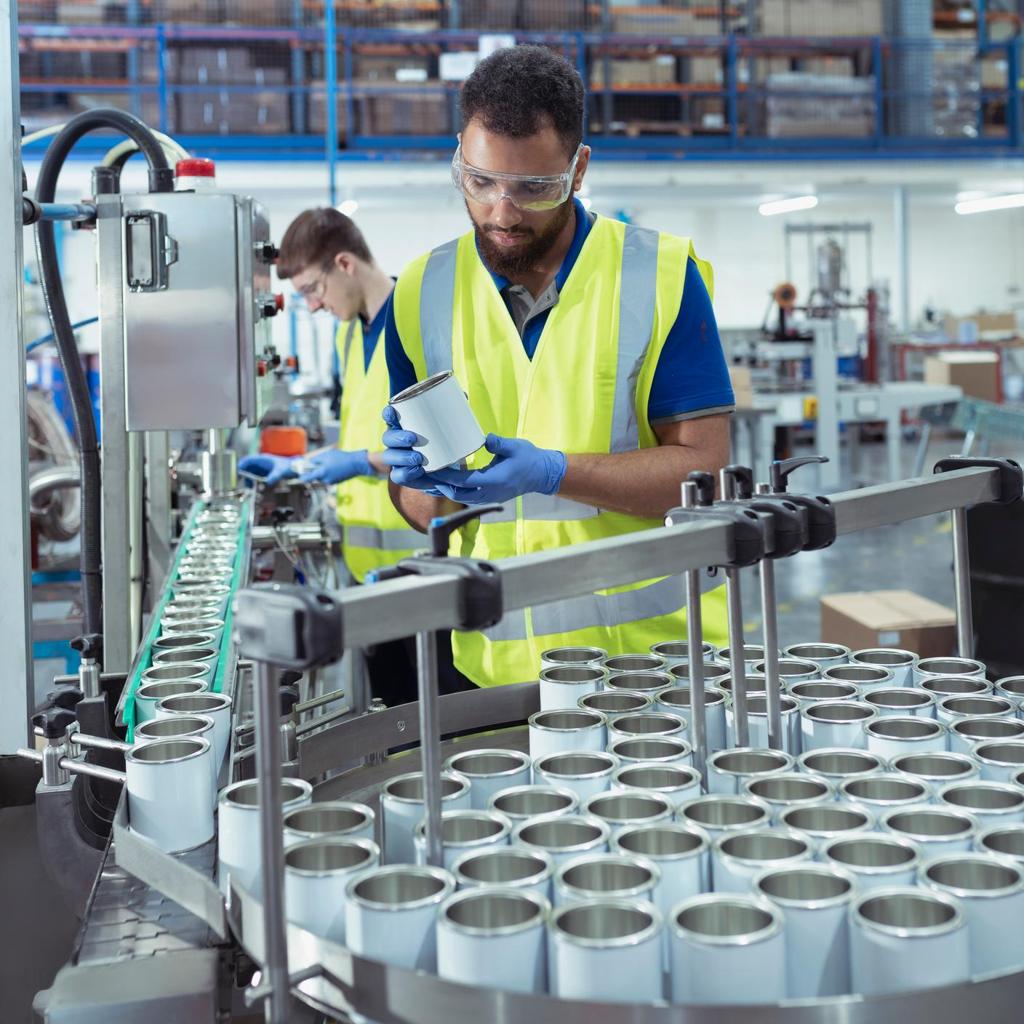
Manufacturing Audit Checklist
A manufacturing audit checklist helps teams spot risks, check product quality, and keep people, machines, materials, and daily work safe and consistent every day.
A well-planned manufacturing audit checklist helps you check how your plant works, find gaps, and fix problems before they grow. It also helps your team follow clear steps and keep good records. With eAuditor Audits & Inspections, you can use digital checklists to record findings, track issues, and make audits easier to manage.
Whether you run a small workshop or a large factory, regular audits can help you reduce waste, protect workers, and improve product quality. Most importantly, they help your team build better habits and keep work on track.
What Is a Manufacturing Audit Checklist?
A manufacturing audit checklist is a list of questions that helps you inspect factory operations, equipment, materials, safety rules, and product quality. It gives auditors a clear way to check each area and record what they find.
For example, an auditor can use the checklist to check machine guards, review work instructions, inspect stored materials, and confirm that staff follow approved procedures. The auditor can then record any gaps and assign actions to fix them.
A good manufacturing audit checklist should match your plant, products, risks, and quality goals. You can also use it during routine inspections, internal audits, supplier audits, and process reviews.
Why Is a Manufacturing Audit Checklist Important?
A manufacturing audit checklist helps you find small problems before they cause costly delays or defects. It also gives workers and managers a shared way to review daily work.
Here are its main benefits:
-
Improves product quality: It helps you find defects and check that products meet set standards.
-
Protects workers: It helps you spot unsafe machines, blocked exits, and poor storage.
-
Reduces waste: It helps you find extra steps, damaged materials, and repeat errors.
-
Supports compliance: It helps you check whether workers follow relevant rules and company procedures.
-
Improves records: It keeps audit findings and actions clear and easy to review.
-
Builds better habits: It helps staff follow the same steps each day.
-
Supports improvement: It helps managers track issues and check whether fixes work.
As a result, regular audits can help your plant work more safely and smoothly.
Key Areas to Include in a Manufacturing Audit Checklist
Every factory has its own risks. However, most manufacturing audits should cover the following areas.
1. Workplace Safety
Worker safety should be a key part of every manufacturing audit checklist. Walk through the plant and check the work areas, equipment, and emergency routes.
Use these questions during your audit:
-
Do workers wear the right personal protective equipment (PPE)?
-
Are machine guards in place and working?
-
Are emergency exits clear and easy to reach?
-
Are fire extinguishers accessible and properly maintained?
-
Do workers know how to report hazards?
-
Are electrical panels and wires safe?
-
Are chemical containers labelled and stored correctly?
-
Are first-aid supplies easy to access?
If you find a serious hazard, report it and take suitable action at once. Do not wait until the audit ends to address an immediate danger.
2. Tools, Machines, and Equipment
Poorly maintained equipment can cause injuries, delays, and poor product quality. Therefore, check the condition of machines and confirm that workers use them correctly.
Your manufacturing audit checklist should ask:
-
Are machines in good working order?
-
Do machine guards work as intended?
-
Do workers follow the equipment manuals?
-
Are damaged tools removed from use?
-
Does the team follow the planned maintenance schedule?
-
Are inspection and maintenance records up to date?
-
Are measuring tools checked and calibrated when required?
-
Do operators have the right training?
Also, check whether the team reports faults and repairs them before restarting affected equipment.
3. Product Quality Control
Quality checks help ensure that products meet customer needs and approved specifications. They also help reduce returns, rework, and complaints.
During the audit, check whether:
-
Workers follow approved product specifications.
-
Staff inspect materials at the right stages.
-
The team records inspection results.
-
Measuring tools suit the checks being done.
-
Workers identify and separate defective products.
-
The team records customer complaints.
-
Staff follow the correct steps when products fail a quality check.
-
The team reviews repeat defects and works to prevent them.
For example, if a batch fails an inspection, the team should identify the affected items, control their use, and investigate the cause.
4. Raw Materials and Inventory
Poor material control can lead to delays, waste, and defects. For this reason, include material receipt, storage, handling, and stock control in your manufacturing audit checklist.
Ask these questions:
-
Does the team inspect incoming materials?
-
Are accepted and rejected materials clearly marked?
-
Can staff trace materials to their source?
-
Are materials stored in suitable conditions?
-
Are stock levels recorded correctly?
-
Does the team follow first-in, first-out (FIFO) where required?
-
Are aisles and storage areas free from obstructions?
-
Are shelves and racks loaded within their rated limits?
In addition, check that workers handle materials safely and protect them from damage.
5. Production Process and Work Instructions
A clear process helps workers complete tasks in the right order. It also reduces errors caused by unclear instructions or inconsistent methods.
Include the following checks:
-
Are current work instructions available at each workstation?
-
Do workers follow the approved process?
-
Are production steps clearly defined?
-
Do operators use the right tools and materials?
-
Are process checks completed at the required stages?
-
Does the team record delays and production errors?
-
Are changes to processes approved and documented?
-
Does the team review recurring problems?
If workers use different methods for the same task, find out why. The team may need clearer instructions, better training, or a revised process.
6. Housekeeping and Workplace Organisation
A clean, organised plant helps workers move safely and find tools faster. It can also make problems easier to spot.
Your manufacturing audit checklist should cover these points:
-
Are floors clean and free from spills?
-
Are walkways clear?
-
Are tools stored in their assigned places?
-
Are waste bins available and emptied as needed?
-
Are work areas well lit?
-
Are materials labelled and organised?
-
Are waste materials handled correctly?
-
Are emergency routes kept clear?
Moreover, check whether workers maintain these standards throughout the shift, rather than cleaning only before an audit.
7. Employee Training and Competence
Workers need the right skills to operate equipment, follow procedures, and identify hazards. A manufacturing audit should check both training records and actual work practices.
Ask:
-
Have workers received training for their tasks?
-
Do operators understand safety procedures?
-
Are training records available?
-
Do workers know how to report defects?
-
Are new employees trained before starting assigned tasks?
-
Does the team provide refresher training when needed?
-
Can workers explain the key steps in their work instructions?
Training records alone may not show whether someone can perform a task correctly. Therefore, observe the work and ask simple questions when needed.
8. Documents and Records
Accurate records help you trace problems and show how the plant controls its processes. They also help auditors compare actual work with approved procedures.
Check whether the team keeps:
-
Current work instructions and procedures.
-
Equipment maintenance records.
-
Product inspection reports.
-
Material receipt and traceability records.
-
Staff training records.
-
Non-conformance reports.
-
Corrective action records.
-
Internal audit reports.
Also, confirm that staff can access the latest approved documents and that they do not use outdated versions.
9. Corrective and Preventive Action
Finding a problem is only the first step. Your team must also fix it, identify its cause, and check whether the solution works.
A manufacturing audit checklist should ask:
-
Does the team record each finding?
-
Does someone take responsibility for each action?
-
Does the team set a clear deadline?
-
Does it investigate the root cause of major problems?
-
Does the team check that actions are complete?
-
Does it verify that the fix works?
-
Does it review repeat findings?
-
Does management track overdue actions?
For instance, if a machine repeatedly produces defective parts, adjusting the machine may solve the immediate issue. However, the team should also investigate why the defect keeps returning.
eAuditor Manufacturing Audit Checklists You Can Use
eAuditor offers digital templates that can help teams carry out manufacturing audits and record findings. You can review the following templates in the eAuditor checklist library and choose those that fit your needs
1. Manufacturing Audit Checklist
This checklist covers safe equipment clearance, stable storage, forklift operator training, battery charging areas, load limits, lifting equipment, and safe material handling. It is useful for reviewing general workplace and warehouse risks.
2. Manufacturing Process Audit Checklist
This template covers worker safety, materials and tools, efficient movements, workstation setup, reporting, and process documentation. It can help you review how work moves through the production process.
3. Manufacturing CAPA Audit Checklist
CAPA means corrective and preventive action. This checklist covers non-conformities, root cause analysis, action owners, deadlines, follow-up, and checks on whether corrective actions work.
4. Manufacturing 6S Audit Checklist
This template checks common hazards, PPE, fire exits, electrical risks, chemical storage, machine guards, gauges, and work instructions. It supports workplace organisation and safety reviews.
5. ISO 9001:2015 Supplier Audit Checklist – Manufacturing
This template covers process controls, maintenance, product outputs, work instructions, storage, material handling, and quality records. It can support supplier and manufacturing process reviews.
These links lead to eAuditor's checklist library. Review each template before use and adapt its questions to your site, products, and applicable requirements.
You can also visit the eAuditor website to learn more about the platform.
How to Conduct a Manufacturing Audit
A simple, repeatable process makes audits easier to manage. Follow these steps to get useful results.
Step 1: Set the audit scope. Decide which department, process, machine, or product line you need to inspect. Set clear goals for the audit.
Step 2: Choose the right checklist. Select a manufacturing audit checklist that matches the risks and tasks in the area. Add any site-specific questions.
Step 3: Review the records. Read relevant procedures, training records, maintenance logs, and quality reports before you begin.
Step 4: Inspect the work area. Walk through the plant and observe actual work. Speak with operators and check equipment, materials, and records.
Step 5: Record your findings. Note each issue clearly. Add evidence, such as a record reference, observation, or photo where appropriate.
Step 6: Assess the risk. Decide which findings need immediate action and which can follow the normal corrective action process.
Step 7: Assign actions. Give each issue to a responsible person and set a suitable deadline.
Step 8: Check the results. Review completed actions and confirm that they solved the problem. Keep unresolved items open until the team addresses them.
Finally, share the results with the people who need to act on them. This helps turn audit findings into real improvements.
Common Mistakes to Avoid During Manufacturing Audits
Even a good checklist can fail if the team uses it poorly. Avoid these common mistakes:
-
Rushing the inspection: Give each area enough time for a proper review.
-
Using the same checklist everywhere: Adjust questions to match the process and its risks.
-
Checking boxes without evidence: Confirm findings through observations, records, and staff discussions.
-
Ignoring minor issues: Small gaps can grow into larger problems if the team leaves them unresolved.
-
Blaming workers: Look for process, equipment, and training issues instead of focusing only on individuals.
-
Failing to follow up: An audit has little value if the team never checks whether actions worked.
-
Keeping unclear records: Write findings in simple, specific language so others can understand them.
A fair and practical audit helps workers report problems early. It also gives managers better information for making decisions.
Best Practices for a Better Manufacturing Audit Checklist
Use these tips to make your manufacturing audit checklist more useful:
-
Keep questions short and clear.
-
Use answer options such as Yes, No, and Not Applicable.
-
Add a notes field for evidence and comments.
-
Record the date, location, auditor, and process under review.
-
Set risk levels for important findings.
-
Assign an owner and due date to each corrective action.
-
Review repeat findings to identify patterns.
-
Update the checklist when processes, equipment, or risks change.
-
Train auditors to ask questions fairly and collect useful evidence.
-
Review audit results with the relevant team and management.
Digital checklists can make this process easier by keeping records in one place and helping teams track actions. However, the checklist itself does not guarantee compliance. Your team must still follow applicable laws, standards, and site procedures.
Frequently Asked Questions
1. What should a manufacturing audit checklist include?
It should cover workplace safety, machinery, product quality, raw materials, production processes, employee training, housekeeping, records, and corrective actions. You should adapt it to your plant and its risks.
2. How often should a manufacturing audit take place?
The frequency depends on your processes, risks, customer needs, and legal requirements. High-risk areas may need more frequent checks, while broader internal audits can follow a planned schedule.
3. Who can conduct a manufacturing audit?
Trained internal auditors, quality staff, safety professionals, process engineers, or other competent people can conduct audits within their roles. Auditors should understand the process and remain objective.
4. What is the difference between a manufacturing audit and a quality inspection?
A quality inspection checks whether a product or material meets specific requirements. A manufacturing audit reviews a wider system, including procedures, equipment, training, records, and process controls.
5. How do you measure manufacturing audit performance?
You can track the number of findings, repeat issues, overdue actions, time taken to close findings, defect rates, and the effectiveness of corrective actions. Use these measures to spot trends and guide improvements.
6. Can I use a digital manufacturing audit checklist?
Yes. A digital checklist can help your team record findings, keep consistent records, and track corrective actions. eAuditor provides manufacturing-related templates that you can review and adapt to your needs.
7. What happens when an audit finds a non-conformity?
Record the issue and supporting evidence, assess the risk, and assign an owner. Then investigate the cause, take corrective action, and verify that the action has resolved the problem.
8. Is a manufacturing audit checklist the same as an ISO 9001 audit checklist?
No. A general manufacturing audit checklist reviews selected factory activities. An ISO 9001 audit checklist focuses on the requirements and processes relevant to the quality management system. The scope and evidence should match the audit's purpose.
9. How can eAuditor help with manufacturing audits?
eAuditor provides digital checklist templates for manufacturing safety, processes, corrective actions, workplace organisation, and supplier audits. You can review the available templates and adapt them to your operations.
Conclusion
A manufacturing audit checklist helps you review safety, quality, equipment, materials, and work practices in a clear and consistent way. It also helps your team find gaps, assign corrective actions, and check whether improvements last.
Choose a checklist that fits your plant, involve the people who do the work, and follow up on every important finding. With suitable eAuditor checklists and a steady audit process, your team can improve control, reduce waste, and support safer, more reliable manufacturing. https://eauditor.app/2026/10/26/manufacturing-audit-checklist-2/


Comments
Post a Comment